
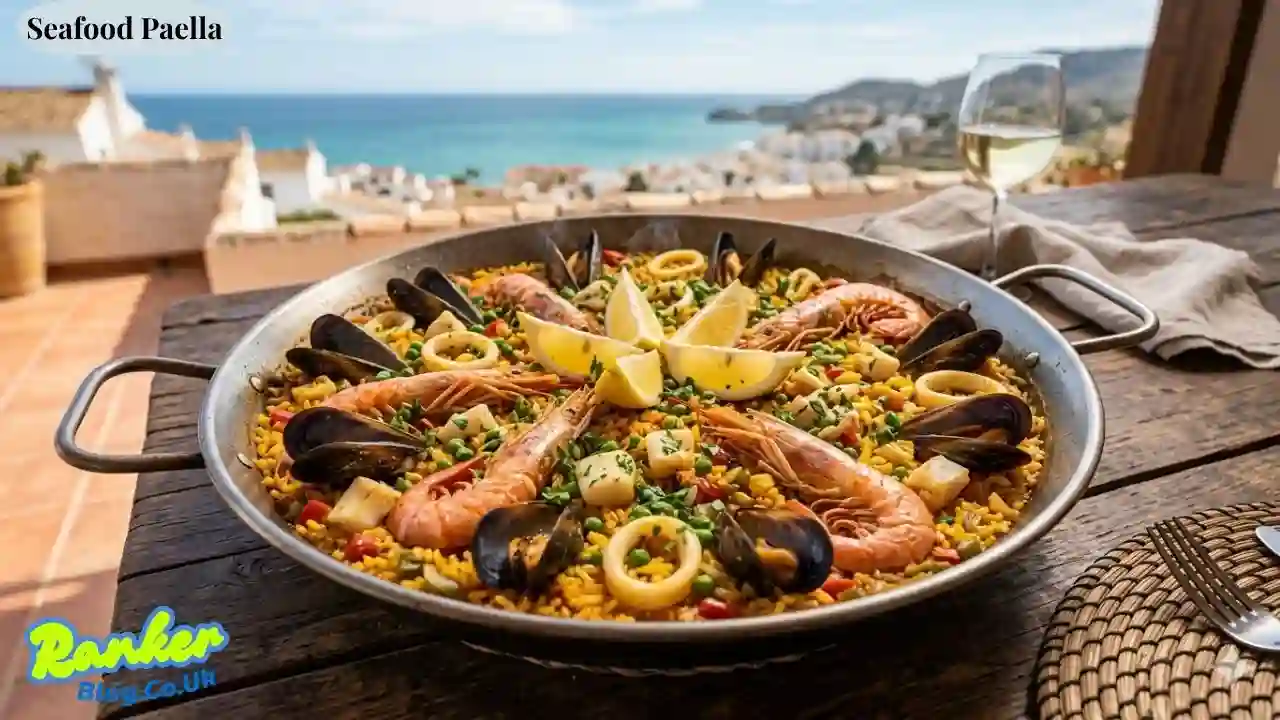
Few dishes in the world carry the kind of cultural weight and mouthwatering appeal that seafood paella does. Golden rice, plump prawns, tender squid, and perfectly steamed mussels all cooked together in one wide, sizzling pan — it is the kind of meal that brings people together around the table. Whether someone is discovering it for the first time or looking to recreate a beloved holiday memory, this guide covers everything there is to know about Spain’s most celebrated dish.
What Is Seafood Paella?
Seafood paella, known in Spanish as paella de marisco, is a traditional Spanish rice dish cooked in a wide, shallow pan over high heat. The name “paella” does not actually refer to the dish itself — it is the Valencian word for the flat, round pan in which the rice is cooked. That pan, with its large surface area and thin base, is what makes the dish unique: it allows the rice to cook evenly while developing a prized crispy bottom layer called the socarrat.
It is worth distinguishing seafood paella from its cousins. Paella Valenciana, the original version, uses land-based proteins like chicken, rabbit, and snails alongside beans and vegetables. Paella mixta combines both meat and seafood. Seafood paella, by contrast, keeps the focus entirely on ocean ingredients — prawns, mussels, clams, squid, and sometimes fish — cooked in a rich, saffron-infused seafood stock. Of all the variations, it is the most internationally recognized and loved version of the dish.
The History and Origins of Seafood Paella
To understand spanish seafood paella, one has to travel back to 18th-century Valencia, a region on the Mediterranean coast of southeastern Spain. Paella began as humble peasant food — farm workers cooked rice over open wood fires, adding whatever ingredients they had on hand: vegetables, beans, rabbit, snails. The dish was less about precision and more about practicality.
The Arab conquest of Valencia is also woven into the dish’s origins. Arab settlers introduced rice cultivation to the region, and some food historians trace the word “paella” to the Arabic “baquia,” meaning leftovers — a fitting description for a dish that was essentially a creative solution to using up what was available.
As the dish spread from Valencia’s inland farmlands toward the coast, coastal communities began swapping out land proteins for fresh seafood pulled straight from the Mediterranean. This shift gave rise to paella de marisco, and the new version quickly caught on. The sunny beaches of Valencia and Barcelona became famous for serving it, and visiting tourists fell in love with the spectacle of a giant, fragrant pan loaded with gleaming shellfish. From there, its international reputation grew rapidly, cementing its place as the signature dish of Spain.
Seafood Paella vs. Other Types of Paella
Spain’s paella landscape is rich and varied, and understanding the differences helps home cooks appreciate what makes each version special.
Paella Valenciana is the oldest and most traditional form. It typically contains chicken, rabbit, flat green beans, lima beans, tomato, and saffron — a deeply earthy, rustic dish that many Spaniards consider the only “true” paella. It rarely features seafood at all.
Seafood paella, or paella de marisco, is the coastal evolution. The rice is cooked in fish or shellfish stock, which gives it a deeply savory, oceanic depth of flavor. Typical seafood paella ingredients include shrimp or prawns, mussels, clams, and squid or cuttlefish. Some versions also incorporate chunks of firm white fish or even lobster for a more luxurious touch.
Paella mixta sits between the two, blending chicken or chorizo with seafood — a popular choice for those who want a bit of everything. Then there are countless regional variations: some parts of Spain add artichokes or peppers, others lean on different spice profiles, and coastal towns each claim their own “correct” method.
Key Ingredients in Seafood Paella
Getting the seafood paella ingredients right is the foundation of a great dish. There are no shortcuts when it comes to the core components.
Rice is arguably the most important element. Short or medium-grain varieties like Bomba or Calasparra are the gold standard — they absorb large amounts of liquid while staying firm, which is essential for the right texture. Long-grain rice is a common mistake that leads to a mushy, disappointing result.
The seafood itself is flexible, but a classic combination includes shrimp or prawns, mussels, clams, and squid rings. Freshness matters enormously here. In the UK, a good fishmonger or supermarket fish counter can supply everything needed for a solid seafood paella recipe uk home cooks will enjoy.
Saffron is non-negotiable. This golden spice gives the dish its signature color and a subtle, earthy floral flavor that cannot be replicated with turmeric or any other substitute. A small pinch bloomed in warm stock is all it takes.
The stock forms the backbone of flavor. A homemade seafood or fish stock will elevate the dish considerably, but a quality store-bought version works perfectly well. The rice soaks up every drop, so the better the stock, the better the final dish.
The sofrito — a simple base of tomato, onion, and garlic cooked slowly in olive oil — is where the dish begins. Smoked paprika adds warmth and color, while fresh parsley brightens everything up at the end.
Finally, there is the socarrat: the thin, crispy layer of toasted rice that forms at the bottom of the pan in the final minutes of cooking. It is the mark of a well-made paella and something every cook should aim for.
What Equipment Do You Need?
The paella pan, or paellera, is purpose-built for this dish. It is wide, shallow, and made from carbon steel or stainless steel — all of which ensure even heat distribution and that coveted socarrat. A standard 38 cm (15-inch) pan serves around four people comfortably.
Traditionally, paella is cooked over a wood fire, which adds a subtle smokiness to the dish. In a home kitchen, a wide gas burner works well. For those using an electric hob, the paella can be started on the stovetop and finished in the oven at around 200°C to ensure even cooking across the pan.
Pan size matters. A pan that is too small will result in thick, unevenly cooked rice; too large and the rice spreads too thin. As a rough guide: a 30 cm pan suits two to three servings, 38–40 cm for four to six, and 50 cm for eight or more.
How to Make Seafood Paella — Step-by-Step
Learning how to make seafood paella is easier than most people expect, and the results are truly impressive. Here is a straightforward method that delivers authentic results.
Start by heating a generous pour of good olive oil in the paella pan over medium-high heat. Add finely diced onion and cook until softened, then stir in minced garlic and grated or chopped tomato. Let this sofrito cook down into a thick, fragrant paste — this takes around 8–10 minutes and should not be rushed.
Add smoked paprika and stir it through the sofrito for about 30 seconds. Then pour in the warm saffron-infused seafood stock. Bring it to a lively simmer.
Add the rice and spread it evenly across the pan using a spoon. From this moment, do not stir. Stirring activates the starch and ruins the texture — the rice must be left to absorb the liquid undisturbed.
Cook on medium-high for around 10 minutes, then reduce to medium-low for a further 8–10 minutes. In the final 5 minutes, nestle the prawns, mussels, and clams across the top. Cover loosely with foil if needed to help the shellfish steam open.
To achieve the socarrat, turn the heat back up to high for the last 60–90 seconds and listen for a gentle crackling sound from the bottom of the pan. Remove from the heat and let the paella rest, uncovered, for 5 minutes before serving with fresh lemon wedges.
Common Mistakes to Avoid
Even experienced cooks can stumble with paella. Here are the pitfalls worth knowing before getting started.
Stirring the rice after adding it is the most common error. It makes the rice creamy and starchy — closer to risotto than paella. Once the rice goes in, hands off.
Using the wrong rice is another frequent issue. Long-grain varieties do not absorb stock in the right way and will not develop the right texture. Bomba rice is widely available online and in specialty stores.
Overcooking the seafood is easily avoided by adding it toward the end. Prawns and mussels need only a few minutes — they toughen quickly with too much heat.
Swapping saffron for turmeric might seem like a budget-friendly move, but the flavor profile is completely different. Saffron is worth the investment, even in small amounts.
Using too much liquid leaves the rice wet and soft rather than firm and separate. The rice should absorb all the stock — if there is liquid left over when the rice is cooked through, the pan needs more heat.
Variations and Customizations
One of the joys of this dish is how adaptable it is. For an easy seafood paella on a budget, frozen seafood works surprisingly well — just thaw it fully and pat it dry before using.
For a special occasion, adding half a lobster or a handful of scallops transforms it into a showstopper. A chicken and seafood paella — or chicken and seafood paella recipe for those who prefer a mixed version — is also a crowd-pleaser, particularly for guests who are not big seafood fans.
Chorizo and seafood paella is another popular variation. The smoky, paprika-rich sausage adds a deep, meaty note that pairs beautifully with prawns and mussels. It is not traditional in the strictest sense, but it is delicious.
For a vegetarian version, the seafood can be replaced with artichoke hearts, roasted peppers, courgette, and butter beans. A good vegetable stock and the same saffron base keep the spirit of the dish intact.
What to Serve with Seafood Paella
Paella is a complete meal on its own, but a few accompaniments round it out beautifully.
Crusty bread is essential for mopping up any extra stock and scooping out the socarrat. Alioli — the Spanish version of garlic mayonnaise, made with olive oil and raw garlic — is the classic condiment alongside paella. Fresh lemon wedges are served at the table so each person can adjust the brightness of their portion.
For wine, a glass of chilled Albariño from Galicia is a natural match — its mineral, citrus-forward character complements seafood perfectly. A dry Spanish rosé or a glass of cava also work wonderfully. Keep the sides light: a simple green salad with sherry vinegar dressing is all that is needed alongside the richness of the rice.
Frequently Asked Questions About Seafood Paella
What rice is best for seafood paella?
Bomba or Calasparra rice are the top choices. Both are short-grain Spanish varieties that absorb a large volume of liquid without becoming mushy. They are widely available in specialty food shops and online.
Can you make seafood paella ahead of time?
Paella is best eaten fresh, straight from the pan. The texture and socarrat do not survive reheating well. However, the sofrito and stock can be prepared a day in advance to save time on the day of cooking.
What is the difference between seafood paella and risotto?
The two dishes share rice as a base, but the techniques are opposite. Risotto is stirred continuously to release starch and create a creamy consistency. Paella rice is never stirred after it is added — the goal is firm, separate grains and a crispy bottom.
Is seafood paella gluten-free?
Yes, seafood paella is naturally gluten-free as long as the stock used does not contain any wheat-based additives. Always check the label on store-bought stock to be sure.
Can you reheat seafood paella?
This is a common question — can you reheat seafood paella safely? The answer is yes, with care. Spread the leftovers in a wide pan with a small splash of water or stock, cover, and warm gently over low heat. Avoid microwaving if possible, as it tends to make the seafood rubbery. For best results, consume leftover paella within 24 hours of cooking.
Also Read: Best Mojo Picon Potatoes Near Me: Your Guide to Finding the Real Deal