
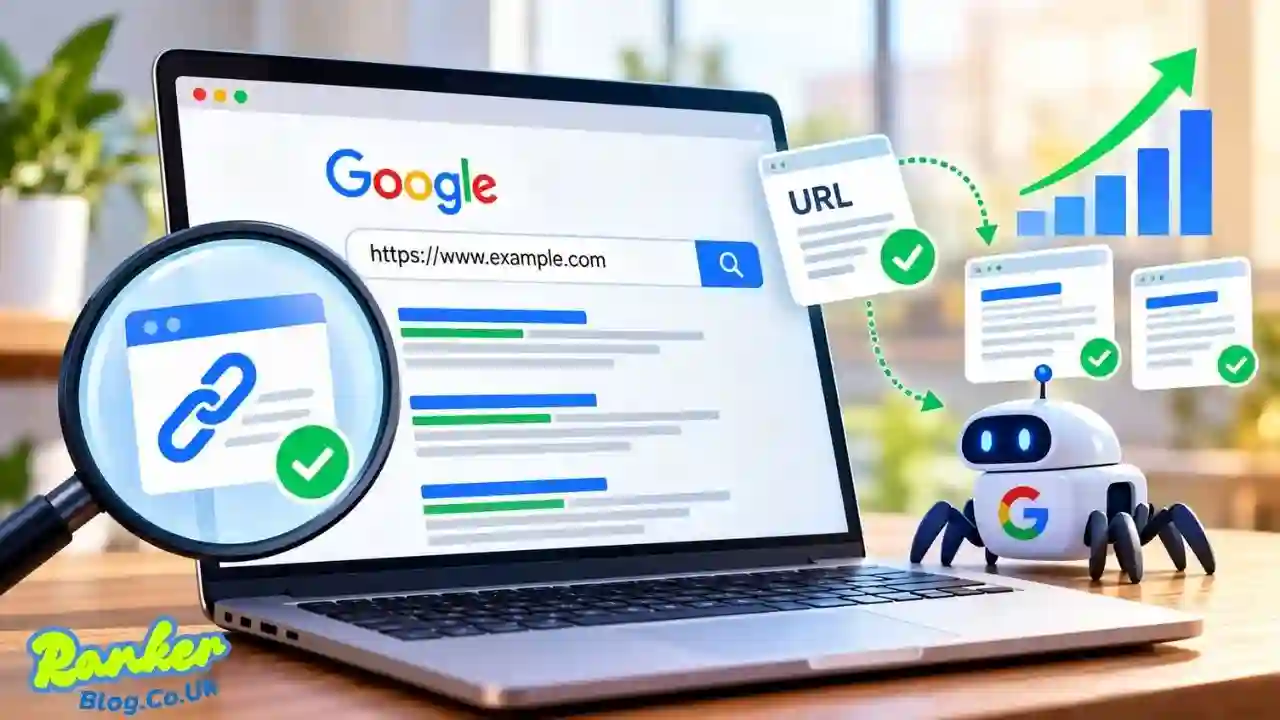
A URL indexer is a tool, service, or workflow designed to help search engines discover and process web pages that have not yet been crawled or indexed. For website owners, SEO professionals, publishers, and marketers, understanding URL indexing matters because publishing a page does not automatically mean Google will crawl, index, or show it in search results.
The practical goal should not simply be to push URLs into an indexing system. A better approach is to make every important URL crawlable, useful, internally connected, technically accessible, and worth indexing. Google explains that pages may take time to be found and processed, and that submitting a sitemap can help with discovery, but Google’s systems determine indexing.
What Is a URL Indexer?
A URL indexer generally refers to a solution intended to encourage or assist the discovery of URLs by search engines.
The phrase can describe dedicated third-party indexing services, SEO software, automated workflows, or even the broader process of submitting and monitoring URLs through tools such as Google Search Console.
This distinction matters because no legitimate service should be described as having guaranteed control over Google’s index. Google decides which pages it crawls, evaluates, and ultimately includes in its search index.
For that reason, a good URL-indexing strategy combines submission with technical SEO, internal linking, quality content, crawl accessibility, canonicalization, and ongoing monitoring.
URL discovery vs. indexing
These terms are often treated as if they mean the same thing, but they are different.
URL discovery means Google becomes aware that a URL exists. Discovery can happen through links, sitemaps, other known URLs, or other signals.
Crawling means Google’s crawler accesses the page and retrieves its content.
Indexing means Google processes the page and decides whether and how it should be represented in its search index.
A page can therefore be discovered without immediately appearing in search results.
Why URL Indexing Matters for SEO
Indexing is one of the foundations of organic search visibility.
Imagine publishing a detailed article, product page, category page, or landing page. If search engines never process that URL, the page has very little opportunity to generate organic search traffic.
That does not mean every URL needs to be indexed. In fact, indexing unnecessary, duplicate, low-value, or automatically generated pages can make a site harder to manage and may create technical SEO problems.
The better objective is selective indexation: help important pages become discoverable and make sure those pages offer enough value to deserve search visibility.
Google’s documentation also emphasizes that duplicate pages can be grouped together and that Google selects a canonical version based on signals such as content, redirects, sitemaps, and canonical annotations.
How a URL Indexer Fits Into the SEO Process
A URL indexer should be viewed as one part of a larger SEO workflow rather than a shortcut around Google’s systems.
A practical workflow looks like this:
- Publish a useful page.
- Make sure the URL is accessible to crawlers.
- Add internal links from relevant pages.
- Include important URLs in an appropriate XML sitemap.
- Check canonical and indexing directives.
- Use Google Search Console when appropriate.
- Monitor whether the page is discovered and indexed.
- Improve the page when it is not providing sufficient value or is technically blocked.
This process is more sustainable than repeatedly submitting the same URL without addressing why the page is not being indexed.
Rapid URL Indexer: Can Faster Submission Mean Faster Indexing?
The phrase rapid URL indexer is often used in SEO to describe a service or workflow that attempts to accelerate URL discovery.
The important distinction is between faster notification or discovery and guaranteed indexing.
A faster submission can potentially help a search engine learn that a URL exists sooner, but it does not force Google to include the page in its index. Google’s own documentation makes clear that recrawling and reindexing can take time and that there are no universal fixed crawl frequencies for every site and URL.
For example, consider two newly published pages:
- Page A is technically accessible, original, well-written, internally linked, included in the sitemap, and clearly useful.
- Page B is a thin page with little unique information and weak site architecture.
Sending both URLs through the same rapid-indexing workflow does not make them equally valuable to a search engine.
What can actually improve indexing speed?
Several practical signals can make URL discovery and crawling more efficient:
Internal linking: A new page linked from established, relevant pages is easier for crawlers to discover than an isolated URL.
XML sitemaps: Sitemaps help search engines discover URLs, particularly across larger sites.
Technical accessibility: A crawler needs to be able to access and retrieve the page.
Consistent site architecture: Clear categories, navigation, and contextual links help search engines understand relationships between pages.
Updated content: When an existing page receives meaningful changes, appropriate recrawling can eventually process those changes.
The takeaway is simple: a rapid URL indexer may support discovery, but site quality and crawlability remain fundamental.
URL Indexer vs. Google Search Console
For many website owners, the first question is whether they need a third-party URL indexer when Google already provides Search Console.
Google Search Console includes the URL Inspection workflow, which can be used to inspect an individual URL and, where available, request indexing. Google specifically recommends reserving requests for important URLs because the feature is subject to quotas.
That makes Search Console particularly useful for:
- Newly published high-priority pages
- Important pages that have recently changed
- Diagnosing indexing problems
- Checking how Google sees a URL
- Troubleshooting canonicalization and related issues
Third-party tools may be useful when professionals manage larger URL sets or want additional automation and monitoring capabilities. But they should complement—not replace—Google’s own tools and sound technical SEO practices.
Comparison: common URL indexing approaches
| Approach | Main purpose | Best use case | Main limitation |
|---|---|---|---|
| Google Search Console | Inspection and indexing requests | Important individual URLs | Requests are limited and do not guarantee indexing |
| XML sitemap | URL discovery | Websites with many important pages | Does not guarantee indexing |
| Internal linking | Discovery and site structure | New content and deep pages | Requires strong site architecture |
| Third-party URL indexer | Automated discovery/submission workflows | SEO operations and larger campaigns | Cannot guarantee Google indexing |
| Natural crawling | Ongoing discovery | Healthy, established websites | Timing varies by site and URL |
What Is URL Rating and How Does It Relate to Indexing?
The keyword url rating can refer to the perceived strength or authority associated with a particular URL, especially in SEO tools.
However, URL rating and indexing are not the same thing.
A URL can have strong backlinks and still face indexing problems because of technical barriers, duplication, canonicalization, poor-quality content, or other issues.
Likewise, a brand-new page can be indexed even though it has little or no external link authority.
This is an important distinction for anyone using SEO metrics. A third-party URL rating score should be treated as a measurement or estimation, not as a direct representation of whether Google will index a page.
Why high URL rating does not guarantee indexing
Search visibility involves many different systems and signals.
A page with substantial backlink strength can still have issues such as:
- A
noindexdirective - A blocked crawl path
- A conflicting canonical
- Duplicate content
- Weak or inaccessible content
- Poor internal linking
- Server or rendering problems
Google explains that when similar pages exist, it may cluster them and select one canonical URL rather than indexing each version independently.
That is why SEO teams should avoid treating a single metric as the final answer.
Common Reasons a URL Is Not Indexed
When a page fails to appear in Google’s index, repeatedly submitting the URL is usually not the best first response.
Instead, diagnose the reason.
1. The page is new
Sometimes the explanation is simply that Google has not discovered or processed the page yet.
New pages may require time before crawling and indexing occur. Google recommends allowing time for recrawling and reindexing rather than assuming that publication automatically produces immediate visibility.
2. The page is blocked from indexing
A page may contain directives that tell search engines not to index it, or access may be restricted.
Technical reviews should check robots directives, response status, accessibility, and related configuration.
3. The URL is a duplicate
Multiple URLs can lead to identical or highly similar content.
In such cases, Google may select one representative canonical URL. Google’s documentation notes that canonicalization can involve signals such as redirects, sitemap inclusion, HTTPS, and rel="canonical" annotations.
4. The page has little unique value
Publishing hundreds or thousands of pages that contain nearly identical information does not create a strong indexing strategy.
Google’s spam policies specifically warn against scaled content created primarily to manipulate search rankings rather than help users. This can apply regardless of whether the content is produced manually, automatically, or with generative AI.
5. The site has weak internal architecture
An orphaned URL with no meaningful internal links may be harder to discover and understand.
A strong site architecture gives important pages logical relationships to other relevant content.
How to Use a URL Indexer Responsibly
If you use a URL indexer, focus on quality control rather than volume.
A responsible workflow starts by separating URLs into groups.
For example:
Priority URLs: Important commercial pages, cornerstone articles, product pages, and pages supporting major organic-search goals.
Supporting URLs: Useful informational pages that strengthen topical coverage.
Low-priority URLs: Temporary pages, duplicate versions, filtered URLs, or pages that do not need organic visibility.
You do not necessarily need to send every URL through an indexing workflow.
A practical URL indexing checklist
Before submitting an important page, verify:
- The URL returns a successful response.
- The page is accessible to search engine crawlers.
- The page has valuable, original information.
- The canonical URL is appropriate.
- The page is not unintentionally marked
noindex. - Relevant internal links point to the page.
- The URL appears in the correct XML sitemap where appropriate.
- The content satisfies the search intent.
- The page is not simply a duplicate of another URL.
This checklist can prevent many indexing problems before an indexing tool becomes necessary.
URL Indexing for Large Websites
Large websites face different challenges from small blogs.
An ecommerce site, publisher, marketplace, directory, or large business website may contain thousands or millions of URLs.
In those environments, the central challenge is often URL prioritization.
You should clearly distinguish between valuable URLs and URLs generated by site functionality.
Examples of potentially low-value URL variations include:
- Filter combinations
- Sorting parameters
- Session-based URLs
- Duplicate category paths
- Tracking parameters
- Automatically generated search-result pages
- Near-identical location pages
Creating and submitting all of these URLs is unlikely to create a better search experience.
Google’s spam policies specifically caution against generating large numbers of pages primarily to manipulate rankings, especially when those pages provide little original value.
Indexing priorities for ecommerce sites
For online stores, a sensible hierarchy might prioritize:
- Main category pages
- Important subcategories
- High-value product pages
- Informational buying guides
- Supporting content
Temporary, duplicate, or extremely thin URLs generally deserve a different technical treatment rather than aggressive indexing.
URL Indexer Mistakes That Can Hurt an SEO Campaign
Using indexing services without understanding the underlying technical problem can lead to wasted time and money.
Submitting every URL
More indexed URLs do not automatically mean more traffic.
A website with thousands of low-value pages can create a less focused crawl environment and a worse user experience.
Assuming indexing equals ranking
Indexed does not mean ranked.
Getting a URL into Google’s index is only one stage. The page still needs to satisfy search intent and compete against other relevant content.
Ignoring canonicalization
If multiple URLs represent essentially the same page, constantly requesting indexing for all of them misses the bigger issue.
Google may choose one canonical page from a group of duplicates.
Relying entirely on automated submissions
Automation can be useful, but SEO is not just a submission problem.
If a website has weak content, poor navigation, technical errors, or little original value, automation cannot turn those weaknesses into strengths.
Publishing content at scale without adding value
Google’s current spam guidance specifically identifies scaled content abuse as a problem when large volumes of pages are created mainly to manipulate search rankings without providing meaningful value to users.
Should Beginners Use a URL Indexer?
For beginners, the answer is usually: start with fundamentals first.
A new website is often better served by learning how to:
- Build a logical internal linking structure
- Create useful pages
- Submit an XML sitemap
- Configure canonical URLs correctly
- Use Google Search Console
- Diagnose crawl and indexing issues
Once those basics are working, an automated URL indexer may become useful for specific workflows.
Beginners should be particularly careful with services that promise instant or guaranteed Google rankings. Indexing, ranking, and organic traffic are separate outcomes.
Does a URL Indexer Guarantee Google Indexing?
No legitimate workflow should be presented as a guaranteed way to force Google to index a URL.
A service can assist with discovery, submission, or monitoring, but Google’s systems ultimately determine whether a page is crawled, processed, and included.
This distinction is crucial when evaluating any rapid URL indexer or SEO automation platform.
Claims such as “100% guaranteed indexing” should therefore be evaluated cautiously unless they are backed by transparent, verifiable evidence and clear definitions of what “indexed” actually means.
How Long Does URL Indexing Take?
There is no universal indexing time that applies to every website.
A page could be discovered and processed relatively quickly, while another page may take considerably longer.
Several factors can affect the process, including:
- Website size
- Server performance
- Internal linking
- Crawl accessibility
- Content quality
- Duplicate content
- Overall site structure
- Google’s own crawling and processing decisions
Google states that there are no fixed crawl frequencies and that crawling and reindexing can vary according to circumstances.
This is why SEO professionals should monitor patterns rather than rely on an exact promise such as “indexed within five minutes.”
How to Improve Indexability Without an Indexing Tool
Some of the strongest indexing improvements do not require a separate service.
Build strong internal links
Link new content from relevant, already established pages.
Contextual links can help search engines discover relationships between pages and understand which content matters within the site.
Maintain a clean sitemap
Your sitemap should represent the URLs you actually want search engines to discover.
Do not treat it as a dump of every URL generated by your CMS.
Fix duplicate content
Where multiple URLs represent substantially the same content, decide which URL should be the preferred version.
Use appropriate redirects or canonical signals where necessary.
Improve page usefulness
A page should exist for a meaningful user reason.
Adding original research, examples, comparisons, practical explanations, firsthand observations, or genuinely useful functionality can make a page more valuable than simply producing another generic article.
Keep technical barriers under control
Check for:
- Server errors
- Redirect chains
- Accidental
noindex - Robots restrictions
- Broken canonical tags
- Rendering problems
- Poor mobile accessibility
Technical SEO creates the conditions in which crawling and indexing can work properly.
How E-E-A-T Applies to URL Indexing Content
E-E-A-T stands for Experience, Expertise, Authoritativeness, and Trustworthiness.
For an article about URL indexing, demonstrating these qualities means avoiding exaggerated claims and explaining the boundaries of what indexing tools can actually do.
An authoritative article should distinguish between Google’s documented behavior and claims made by third-party SEO platforms.
It should also avoid suggesting that an indexing service is capable of bypassing Google’s decision-making systems.
Trust is built through transparency: explain what a technique does, what it does not do, and what the user should check independently.
That approach is more useful than promising that one tool will solve every indexing problem.
URL Indexer Pros and Cons
| Pros | Cons |
|---|---|
| Can streamline URL submission workflows | Does not guarantee indexing |
| Useful for managing larger SEO operations | Some services may provide limited transparency |
| Can reduce repetitive manual work | May become unnecessary for smaller sites |
| Can complement technical SEO processes | Cannot fix poor content or site architecture |
| May help organize indexing campaigns | Aggressive automation can encourage low-quality practices |
The key is to use automation where it genuinely improves efficiency, not as a substitute for SEO fundamentals.
Frequently Asked Questions About URL Indexers
What is a URL indexer?
A URL indexer is a tool, service, or workflow designed to help search engines discover and process web URLs. It can support discovery and submission, but it cannot guarantee that Google will index or rank a page.
What is a rapid URL indexer?
A rapid URL indexer typically refers to an indexing service focused on accelerating URL discovery or submission. Faster submission should not be confused with guaranteed indexing.
Does Google guarantee indexing after a URL is submitted?
No. Google can crawl, process, cluster, canonicalize, or choose not to include a page. Requesting indexing asks Google to consider a URL; it does not guarantee inclusion.
Is Google Search Console better than a URL indexer?
For many websites, Search Console is the best place to start because it provides Google’s own tools for inspection, indexing requests, and diagnostics. Third-party services can be considered for automation or specialized workflows.
What does URL rating mean?
URL rating is generally an SEO metric used by third-party platforms to estimate the strength or authority associated with a URL. It should not be treated as an official Google measurement or an indexing guarantee.
Why is my page not indexed even after submission?
Possible reasons include technical blocking, duplicate content, canonicalization, low-value content, weak internal linking, or simply the fact that Google has not processed the page yet.
Should I submit every page to an indexing service?
No. Focus on important URLs that are useful, technically accessible, and intended for organic search. Duplicate or low-value pages should usually be handled through better site architecture and technical SEO rather than mass submission.
Can backlinks help with URL discovery?
Yes, links can contribute to how search engines discover pages. But backlinks do not automatically guarantee indexing or ranking, and their value depends on relevance, quality, and the broader context of the site.
Final Takeaway: Use a URL Indexer as Part of a Bigger SEO Strategy
A URL indexer can be useful when it makes URL discovery and submission more efficient, especially for SEO teams managing many important pages. But indexing should never be treated as a standalone growth tactic.
The strongest approach is to create valuable pages, make them technically accessible, connect them through relevant internal links, maintain clean sitemaps and canonical signals, and use tools such as Search Console to monitor how Google processes them.
A rapid URL indexer may improve the efficiency of discovery workflows, while url rating can provide a third-party view of URL strength. Neither replaces the fundamentals that determine whether a page deserves to be crawled, indexed, and ultimately shown to searchers.
Most importantly, avoid the temptation to equate more submitted URLs with better SEO. Google’s current spam policies explicitly target large-scale, low-value content created primarily to manipulate search rankings.
The better goal is simple: build fewer, stronger URLs that genuinely help users, make them easy for search engines to discover, and use indexing tools only where they add meaningful operational value.
Start by auditing the URLs that matter most on your website, then fix technical and content barriers before investing heavily in automated indexing.
Also Read: Article Rewriter UploadArticle.com: A Practical Guide for Writers