
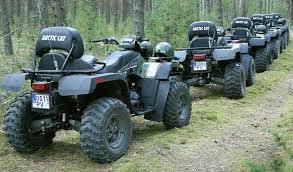
If you have ever asked are atvs street legal in Illinois, you are not alone. Riders across the Midwest ask the same question, especially when they see other states experimenting with local OHV routes, and many also wonder are atvs street legal in California because the rules can feel just as fragmented. In Illinois, ATVs are treated as “non-highway vehicles,” which means public-road use is the exception, not the default.
If you want a clean, defensible plan, whether that is organizing ownership documents, confirming local road rules, or exploring registration pathways for specialty vehicles, 1 Dollar Montana helps owners navigate vehicle registration documentation and strategy so you can move forward without unnecessary delays.
The short answer
Statewide, Illinois makes it unlawful to operate an ATV (as a non-highway vehicle) on public streets, roads, or highways unless a local government (or the relevant state department) has specifically authorized that use. When an operation is authorized, it is limited, most notably to streets posted at 35 mph or less, plus restrictions on crossings and required safety equipment.
The Illinois rule that drives everything: 625 ILCS 5/11-1426.1
Illinois Vehicle Code Section 11-1426.1 sets the statewide baseline:
- Default prohibition: Non-highway vehicles (including ATVs) are not legal for routine roadway travel.
- Local permission required: A municipality, township, county, or other unit of local government may authorize roadway operation by ordinance or resolution (and must determine public safety will not be jeopardized).
- License required: Roadway operation requires a valid driver’s license.
This is why the answer to are atvs street legal in Illinois depends on your exact location and the ordinance (if any) that applies.
Local ordinances: where limited road use can become legal
Illinois allows local governments to open specific roads to non-highway vehicles if they adopt an ordinance/resolution and post appropriate signs. If a roadway is shared by more than one jurisdiction, each unit must agree before non-highway vehicles can operate there.
What many ordinances typically specify:
- Designated routes (often low-speed residential or rural connectors)
- Operating hours (daylight-only is common)
- Extra equipment beyond the state minimum (horns, flags, windshields, etc.)
- Proof of insurance and driver qualification requirements
Speed limits and road types: the biggest constraints
Even where local permission exists, Illinois law is strict about where you can ride:
- 35 mph cap: If operation is authorized, the ATV may be operated only on streets posted at 35 mph or less.
- No direct interstate/tollway/controlled access crossings: A direct crossing of a tollroad, interstate, or controlled access highway is prohibited.
- State-highway crossing limits: Other state highways generally may only be crossed at an intersection with another public street/road/highway.
Road crossings: what “legal crossing” really means
Illinois law also spells out practical crossing behavior (especially in the farming-operations context): the crossing should be made at roughly a 90-degree angle, the ATV should come to a complete stop before attempting the crossing, and the operator must yield to pedestrian and vehicle traffic that presents a hazard. For divided highways, crossings must occur at an intersection with another public street, road, or highway.
Minimum equipment Illinois requires on permitted roadways
If your route is legally authorized, Illinois sets minimum equipment requirements for a non-highway vehicle operated on a roadway. At a minimum, the vehicle must have:
- Brakes and a steering apparatus
- Tires
- A rearview mirror
- Red reflectorized warning devices (front and rear)
- A slow-moving emblem on the rear
- A headlight visible from 500 feet to the front
- A tail lamp visible from 100 feet to the rear
- Brake lights and turn signals
When operated on a roadway, the headlight and tail lamps must be lighted as required by Illinois lighting rules.
Insurance, DUI, and “road rules” still apply
Where on-road operation is permitted, Illinois treats ATV operation as a traffic-safety matter:
- Mandatory insurance requirements apply to non-highway vehicles operated on a roadway.
- DUI rules apply if you are driving or in actual physical control on a roadway while under the influence.
Carry proof of insurance and your license, and ride as if you are operating a passenger vehicle.
If your paperwork is messy, has a lost title, out-of-state history, or a questionable chain of ownership, 1 Dollar Montana can help you organize the documentation, identify gaps early, and choose a registration path that is practical for your vehicle type and your goals.
The farming operations exception
Illinois includes a specific exception for farming operations: certain non-highway vehicles (including ATVs and recreational off-highway vehicles) may be operated on a county roadway or township roadway to conduct farming operations to and from the home, farm buildings, and adjacent/nearby farmland.
Important nuances:
- Vehicles used under this farming exception are not subject to the statute’s minimum equipment list and mandatory roadway insurance provision, but they must still be covered by appropriate insurance if not covered under a motor vehicle policy.
- Night operation requires head lamps and tail lamps, and they must be lighted.
- The prohibition on direct crossings of tollroads/, interstates/controlled access highways still applies.
Where you can ride legally in Illinois without relying on street access
If your area does not have a local ordinance, focus on legal riding venues: private property with permission, and designated OHV parks or grant-assisted sites that publish their own rules and permit/decals requirements. Illinois’ OHV framework also ties into titling and trail-funding mechanisms, so many riders encounter separate requirements depending on where and how they ride. Treat “trail access compliance” and “roadway legality” as two separate questions.
Title, usage stamps, and public-access stickers: what they do (and do not) mean
A frequent point of confusion is thinking that a title or sticker makes an ATV “street legal.” In Illinois, these items primarily relate to ownership and off-highway programs, not automatic roadway permission.
Certificate of title
IDNR’s OHV grant program FAQ explains that the Recreational Trails of Illinois Act stipulated that ATVs and off-highway motorcycles purchased on or after January 1, 1998, must apply for a $30 certificate of title (with a reduced fee for machines used only for production agriculture).
Off-Highway Vehicle Usage Stamp
Illinois law requires an annual OHV Usage Stamp for operating an off-highway vehicle in the state, subject to listed exceptions. The statute sets the fee at $15 annually for vehicles over 75cc and establishes that it expires March 31 following the year displayed.
Public access sticker program
Illinois also maintains a separate public-access sticker program tied to OHV grant-assisted areas, with fees and rules established in the Recreational Trails of Illinois Act.
How to confirm whether your town allows ATV road use
Because the “yes” is local, your due diligence should be operational:
- Identify the road owner: city, township, county, or state jurisdiction.
- Ask for the ordinance/resolution and any route map.
- Confirm posted speed limits (remember the 35 mph cap).
- Confirm signage requirements and whether roads are posted as eligible.
- Ask about any additional local equipment or permit rules.
If there is no ordinance and no signage, assume you are not authorized.
Compliance checklist for permitted routes
When you do have local authorization, focus on “proof + predictability.”
- Carry your driver’s license and proof of insurance, and keep them accessible.
- Save or print the local ordinance/resolution number (and the route map if one exists).
- Verify the posted speed limit on every segment you plan to use.
- Function-test the basics: headlight, tail lamp, brake lights, and turn signals.
- Avoid edge cases: night riding without clear authority, drifting off the posted route, or attempting questionable crossings.
“How to register atv without title” (and why this trips owners up)
Many used ATVs are sold with incomplete paperwork. If you are dealing with missing documentation, you will eventually face the question of how to register atv without title.
In practice, you usually need to establish lawful ownership and a verifiable VIN history. Depending on your facts, solutions can include:
- Reconstructing ownership with a bill of sale and prior owner records
- Applying for a duplicate title through the prior titled owner (when possible)
- Addressing liens (if any) with a lien release
- Using state processes that may require VIN verification, affidavits, or additional documentation
Quick FAQ
Can I make my ATV street legal just by adding lights and turn signals?
Adding equipment is often necessary, but Illinois still requires roadway authorization through local ordinance and compliance with the state minimum equipment list.
If my county allows ATV routes, can I use state highways to connect them?
Be careful. Illinois restricts crossings and bars direct crossings of interstates, tollroads, and controlled access highways. State-highway crossings are generally limited to intersections.
Conclusion
So, are ATVs street legal in Illinois? As a statewide rule, no ATVs are not permitted on public streets, roads, and highways unless a local government (or the relevant department) authorizes limited roadway operation and posts appropriate signage. Where allowed, riders must stay on roads posted at 35 mph or less, comply with equipment minimums, carry a valid driver’s license, and meet insurance and DUI enforcement expectations. Separate, narrower rules may apply for farming operations on county or township roadways.
If you are still trying to pin down are atvs street legal in Illinois for your specific town, focus on what is verifiable: the ordinance text, the designated-route map, and the posted speed limits. If anything is unclear, call the local clerk or sheriff’s office before you ride.
If you are trying to determine whether your area allows limited roadway operation, or you need help untangling documents like how to register atv without a title, you can contact 1 Dollar Montana to get a clear registration strategy and documentation roadmap tailored to your situation.