
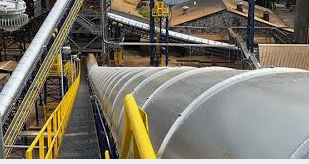
Do you need a conveyor belt to move your materials and products? However, a basic conveyor system may not be effective in transferring bulky materials. That’s why you need a heavy-duty conveyor belt to run your high-speed production lines smoothly. This component receives significant pressure every day; so, you have to check its quality and durability before making a deal.
This blog helps you identify the best industrial conveyor belts for different applications.
Why do you need a heavy-duty conveyor?
In steel mills and mines, conveyor systems play a role in improving production. A damaged belt can lead to disruption in your routine. Heavy-duty conveyor belts are designed to endure high-load conditions and ensure production continuity.
The belt’s strength lets you operate the conveyor system safely. But, many factory owners overlook this factor and focus mainly on price.
The higher value of a heavy-duty industrial conveyor belt is not just for thickness. Its durable design and high tensile strength are the main features that have distinguished this system.
You will find a perfect balance of engineering and technology in the conveyor.
Factors influencing your choice of heavy-duty conveyor belts
When looking for a conveyor system, you must focus on a few relevant factors.
Belt material
Conveyor belts are made from various materials that differ in efficiency and durability. The best material withstands extreme weight and impact caused by your industrial items.
Check the features of the materials of your conveyor belts-
Rubber belts
- A versatile material intended for various applications
- High durability, offering flexibility
- Come with gripping properties.
- Resistant to impact and abrasion
- No damage from moisture and chemicals
Nylon belts–
- A low-stretch material with incomparable strength
- Resist heavy loads and abrasion
- Excellent shock absorption ability
PVC belts–
- Affordable material with resistance to oils and chemicals
- Manage moderate and heavy loads
- Resistant to abrasion
Steel belts
- Dimensional stability and superior heat resistance
- Manage heavy loads
- Resistant to impact
Transition distance
This is a significant factor when manipulating your conveyor system into a troughed profile. It indicates the distance your belt has to travel in its straight or un-angled profile before accessing the transition point into the troughed area. It comes down to the angle at which your conveyor belt is to be troughed. For an increased transition distance, the angle should be more acute. A short transition distance can lead to stress on the belt.
Tensile strength
You have to check the strength rating of the industrial conveyor belts before making a deal. It denotes the highest force endured by the belt. The mechanical system will hold its structural integrity for several years. So, when comparing the product, assess the universally applied rating.
Gradients
Some manufacturers need to transport products and materials to a different level. So, the conveyor is to be angled to create a gradient. In this case, you have to choose a pliable and flexible conveyor belt. Select a belt with an appropriate surface layer friction to move items up the slope.
Coverage level
A premium conveyor belt comes with durable hardware for various industrial applications. Still, there is a risk of deterioration as you use it regularly.
Some industrial materials are corrosive and have sharp edges. In case they fall onto your belt, it may get damaged. You have to buy a conveyor belt that has a sturdy protective layer.
Impact resistance
Too much load may cause an impact on your conveyor system. Over time, you will find the signs of premature damage to the belt. For this reason, you should look for a belt with maximum impact resistance. It will absorb the impact energy and distribute it consistently to prevent damage. High-quality reinforced belts have a strong cover and are best for your heavy load applications.
Dimensions of the belt
The conveyor’s length and width influence its transportation ability. The belt must have a significant width to accommodate your industrial material’s size. A wide belt also ensures a smooth movement of the items. It facilitates optimal space usage that improves productivity.
Tensioning system
The loaded conveyor belt should maintain proper tension and prevent excessive tightness. The tensioning system enables the belt to align with your pulleys. Different tensioning systems, including automatic tensioners, are intended for industrial applications.
Conclusion
The best conveyor belt for industrial loads will improve your productivity and efficiency. Choose the impact-resistant belt material that provides lasting value. You can safely transport materials in your warehouse. Optimise your operations with the conveyor system and provide long-term cost savings. Find the top-rated supplier to buy the machine for your industrial applications.
Read Also: rankerblog.co.uk