
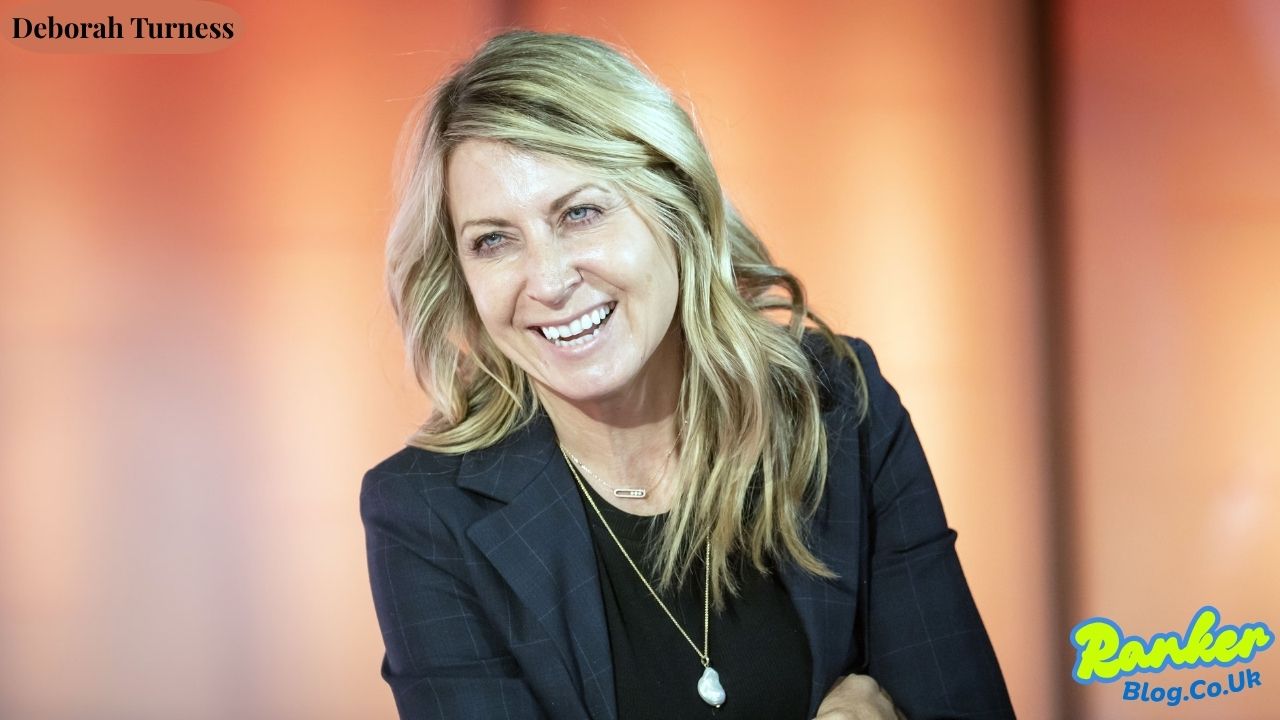
Introduction
In the world of broadcast journalism, few names carry as much weight as Deborah Turness. As a trailblazing executive who broke barriers in an industry traditionally dominated by men, her journey from a freelance producer in Paris to becoming the BBC CEO represents a remarkable story of ambition, talent, and perseverance. Throughout her career, she has held some of the most influential positions in news broadcasting, including serving as the editor of BBC News during one of the most challenging periods in modern media.
| Category | Details |
|---|---|
| Full Name | Deborah Turness |
| Date of Birth | March 4, 1967 |
| Place of Birth | Meriden, Solihull, England |
| Age | 58 years (as of 2025) |
| Nationality | British |
| Education | – BA in French and English, University of Surrey – Postgraduate Diploma in Journalism, University of Bordeaux, France |
| Marital Status | Previously married |
| Spouse | Damien Steward (first husband, television journalist) |
| Residence | Previously Shepherd’s Bush, London |
| Profession | Broadcast Journalist, News Executive |
| Years Active | 1988 – 2025 |
| Notable Positions | – Freelance Producer, ITN Paris Bureau (1988) – ITN North of England Producer (1991) – Editor, 5 News (2000-2002) – Editor, ITV News (2004-2013) – President, NBC News (2013-2017) – President, NBC News International – CEO, ITN (until 2022) – CEO, BBC News (2022-2025) |
| Major Achievement | First woman to become head of network news in the UK (2004) |
| Awards & Honors | – Women in Television and Film “News and Factual Award” (2008) – Amnesty International UK Media Award (2008) – Invited to Buckingham Palace State Banquet for Barack Obama (2011) |
| Key Initiatives | – Launched BBC Verify fact-checking unit (2023) |
| Resignation | November 9, 2025 (from BBC) |
| Reason for Departure | Allegations of editorial bias, Trump speech editing controversy |
Early Life and Educational Foundation
Born on March 4, 1967, in Meriden, Solihull, England, Deborah Turness grew up in the heart of the English Midlands. Her early years laid the groundwork for what would become a distinguished career in journalism. Recognizing the importance of a strong educational foundation, she pursued higher education with determination and focus.
She earned a Bachelor of Arts degree in French and English from the University of Surrey, a qualification that would prove invaluable in her international career. Not content to stop there, Turness continued her studies abroad, obtaining a postgraduate diploma in journalism from the prestigious University of Bordeaux in France. This combination of language skills and journalistic training positioned her perfectly for a career that would span multiple continents and cultures.
Personal Life

While Deborah Turness has always maintained a relatively private personal life, some details about her family have emerged over the years. She previously lived in Shepherd’s Bush, London, with her first husband, television journalist Damien Steward. The relationship between Deborah Turness and her husband reflected the close-knit nature of the broadcasting community, where many professionals find partners who understand the demanding nature of news work. Though specific details about Deborah Turness salary in her various roles have not always been publicly disclosed, her positions at major broadcasting organizations certainly placed her among the highest-earning executives in the industry.
Early Career Beginnings at ITN
Breaking Into Broadcasting
Deborah Turness launched her journalism career in 1988 as a freelance producer in the Paris Bureau of ITN (Independent Television News). This starting point was fitting given her French language skills and international perspective. Working in Paris during the late 1980s provided her with exposure to major European news stories and helped her develop the global outlook that would characterize her later work.
Rising Through the Ranks
By 1991, Turness had proven her capabilities and returned to England, where she became ITN’s North of England producer. This role allowed her to develop expertise in domestic British news while building important relationships within the organization. Between 2000 and 2002, she held progressively senior positions as Deputy Editor and then Editor of 5 News, demonstrating leadership abilities that would soon catapult her to even greater responsibilities.
ITV News Leadership: Making History

A Groundbreaking Appointment
In 2004, Deborah Turness achieved a historic milestone when she became Editor of ITV News. This appointment made her the first woman to become head of network news in the United Kingdom, shattering a significant glass ceiling in British broadcasting. The significance of this achievement cannot be overstated—in an industry where women had long struggled to reach the highest editorial positions, Turness proved that exceptional talent and dedication could overcome traditional barriers.
Transforming ITV News
During her tenure at ITV News, which lasted until 2013, Turness oversaw major coverage of significant national and international events. She brought fresh perspectives to news presentation and editorial decision-making, helping to modernize how stories were told and delivered to audiences. Her leadership style emphasized strong reporting, compelling storytelling, and journalistic integrity.
Recognition and Awards
The quality of work produced under her leadership did not go unnoticed. In 2008, she won “The News and Factual Award” from Women in Television and Film, recognition of her contributions to the industry and her role as a pioneer for women in broadcasting. That same year, she was co-winner of the Amnesty International UK Media Award for “Too Young to Die – Children of the Frontline,” demonstrating her commitment to important humanitarian storytelling.
Perhaps one of the most prestigious honors came in May 2011, when Turness was the only journalist invited to the Buckingham Palace State Banquet for then-President Barack Obama. This invitation reflected both her professional standing and the respect she commanded within British media circles.
The NBC News Chapter
Crossing the Atlantic
In 2013, Deborah Turness took on what many considered the ultimate challenge in broadcast journalism—she was appointed president of NBC News. This move represented a significant transition, as she became one of the few British executives to lead a major American news network. The appointment signaled NBC’s desire for fresh leadership and new perspectives in an increasingly competitive news landscape.
Navigating Challenges
Her time at NBC News from 2013 to 2017 was marked by both achievements and significant challenges. She worked to modernize NBC’s news operations and digital presence while maintaining the network’s traditional strengths in broadcast journalism. However, her tenure also coincided with the Brian Williams controversy, a scandal involving the anchor’s fabricated stories that shook the network to its core. While Turness was not directly responsible for Williams’ misconduct, she faced criticism over how the situation was handled.
Despite these challenges, she demonstrated resilience and leadership during difficult times. She later became president of NBC News International, continuing to expand the network’s global reach and influence.
Return to Britain: ITN CEO
After her American adventure, Deborah Turness returned to British broadcasting, serving as CEO of ITN until 2022. This role represented a homecoming of sorts, as she returned to lead the organization where she had started her career decades earlier. As CEO, she oversaw all of ITN’s news operations and business strategy during a period of significant change in the media industry, as digital platforms continued to disrupt traditional broadcasting models.
Leading BBC News in Turbulent Times
The Appointment
In January 2022, Deborah Turness was appointed CEO of BBC News, though her start was delayed due to notice period obligations at ITN. She joined the BBC Board in September 2022 for a two-year term, taking the helm of one of the world’s most respected and scrutinized news organizations. As BBC CEO, she faced the enormous responsibility of maintaining the corporation’s reputation for impartiality and quality journalism while navigating an increasingly polarized political environment.
The BBC Verify Initiative
One of Turness’s most significant initiatives at the BBC was the launch of BBC Verify in 2023, a dedicated fact-checking unit. Conceived as a 60-strong team committed to transparency and fighting misinformation, BBC Verify represented an ambitious attempt to adapt traditional journalism to the challenges of the digital age, where false information spreads rapidly across social media platforms.
The initiative reflected Turness’s understanding that modern news organizations must be proactive in verifying information and transparent about their processes. However, the unit also faced controversies and criticisms from various quarters, with some questioning its effectiveness and others raising concerns about its editorial approach.
Mounting Controversies
As editor of BBC News, Turness found herself at the center of several significant editorial controversies. One particularly contentious situation involved a Gaza documentary that featured narration by the son of a Hamas minister, raising questions about editorial judgment and due diligence. Critics argued that this represented a lapse in the rigorous standards expected of the BBC.
Allegations of editorial bias at the BBC became an increasingly prominent issue during her tenure. The organization faced criticism from multiple political perspectives, with some accusing it of favoring certain viewpoints while underplaying others. For Turness, managing these criticisms while trying to maintain the BBC’s traditional commitment to impartiality proved increasingly challenging.
A particularly explosive controversy erupted over the editing of a speech by former President Donald Trump. The BBC’s decision to edit portions of Trump’s remarks sparked intense criticism about editorial interference and whether the organization had fairly represented his statements. This controversy would ultimately prove to be a turning point.
Resignation and Departure
On November 9, 2025, Deborah Turness announced her departure from the BBC amid allegations of editorial bias. In an unprecedented move, she resigned alongside Director-General Tim Davie following sustained criticism of how the organization had edited Trump’s speech. The joint resignation of both top executives sent shockwaves through the British media industry and raised profound questions about editorial independence, political pressure, and the future of public service broadcasting.
For Turness, who had spent decades building a reputation as a serious and principled journalist, the circumstances of her departure represented a difficult end to her time at the BBC. The situation highlighted the immense pressures facing modern news executives, who must navigate an environment where every editorial decision is scrutinized and where accusations of bias come from all directions.
Legacy and Impact on Broadcast Journalism
Breaking Barriers
Regardless of the controversies that marked the end of her BBC tenure, Deborah Turness’s broader legacy as a pioneering female news executive remains significant. As the first woman to become head of network news in the UK, she opened doors for countless other women aspiring to leadership positions in journalism. Her success demonstrated that women could excel in the highest-pressure editorial roles and manage major news organizations effectively.
Innovations and Contributions
Throughout her career, Turness championed innovations in news presentation and coverage. She understood that journalism must evolve to remain relevant, embracing digital platforms while maintaining traditional standards of accuracy and fairness. Her work on initiatives like BBC Verify, despite controversies, showed a willingness to experiment with new approaches to combating misinformation.
The Challenges of Modern News Leadership
Turness’s career also illustrates the extraordinary challenges facing news executives in the 21st century. The erosion of trust in media institutions, the rise of social media as a news source, increasing political polarization, and the economic pressures on traditional broadcasters have made leading a major news organization exponentially more difficult than in previous generations.
Her management style and decision-making were sometimes questioned, and her tenure at both NBC and the BBC ended amid controversies. However, these difficulties reflect broader industry challenges rather than merely individual shortcomings. Every major news executive today faces similar pressures and criticisms.
Conclusion
The story of Deborah Turness is ultimately one of remarkable achievement tempered by the harsh realities of modern media leadership. From her early days as a freelance producer in Paris to becoming BBC CEO and editor of BBC News, she rose to the very top of her profession through talent, determination, and hard work. She broke significant barriers for women in broadcasting and led major news organizations on both sides of the Atlantic.
While the controversies and criticisms that marked the later stages of her career, particularly her departure from the BBC, complicate her legacy, they should not overshadow her broader contributions to journalism. Turness represented a generation of news executives who tried to maintain traditional journalistic values while adapting to a rapidly changing media landscape. Her career offers important lessons about leadership, resilience, and the ongoing challenges of maintaining editorial integrity in an age of intense scrutiny and polarization.
As the media industry continues to evolve, the experiences of executives like Deborah Turness will provide valuable insights for future generations of journalists and news leaders. Her journey reminds us that even the most talented and dedicated professionals can face criticism and setbacks, but their contributions to their field remain meaningful nonetheless.
Also Read: Lyse Doucet A Remarkable Journey in International Journalism