
This constant struggle usually manifests itself in anxiety, lack of confidence, and emotional burnout. Fortunately, recovery provides a feasible means of breaking this cycle and proceeding with a more balanced state of mind.
Moreover, by being conscious of spiritual practices, people can be taught how to let go of self-will without abandoning accountability. The Third Step Prayer is one such practice, providing a structured way to shift from fear-based control toward trust, acceptance, and emotional stability.
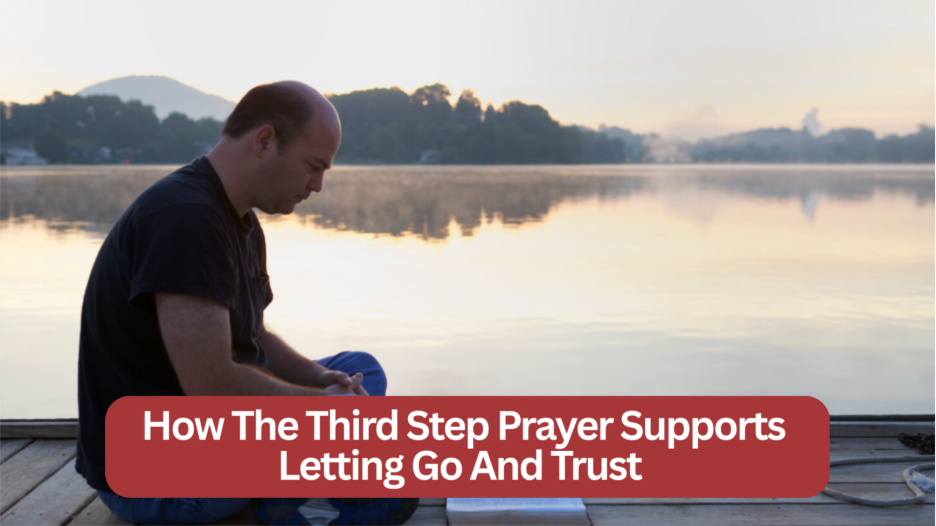
This article describes the purpose of the Third Step Prayer to facilitate letting go and trusting in the recovery.
1. Surrender Releases Burden of Control
When you recite the Third Step Prayer AA, you make a conscious decision to stop trying to manage every aspect of life on your own and instead place trust in guidance beyond your personal control.
This prayer is not passive; it is an everyday decision that replaces exhausting self-reliance with purposeful surrender. Psychological tension is reduced by means of conscious, unremitting sacrifice during prayer.
Research shows that spiritual practices that encourage letting go can help people feel calmer and cope better during difficult situations. Hence, this assures moving away from constant control and toward trust, helping the nervous system relax.
2. Direction Toward Purpose Rather Than Self‑Critical Focus
Once you dedicate yourself to the Third Step Prayer, you start drifting out of self-obsession and towards purpose beyond personal issues at hand. This is not merely a spiritual concept; it goes along with research on recovery that has given spiritual well-being as a potential element in enhanced recovery achievement.
For individuals in substance use treatment, higher spiritual well‑being has been connected to reduced frequency of substance use and enhanced recovery progress. Purpose beyond immediate self‑will is a cornerstone of sustainable recovery. Prayer serves as a consistent reminder that you are part of something larger than your immediate challenges.
3. Daily Habit Strengthens Trust Muscle

Trust is not built in a single moment. Just as physical fitness depends on regular exercise, the ability to let go depends on consistent practice. When you make the Third Step Prayer part of your daily routine, you reinforce the neural pathways associated with acceptance and emotional regulation.
Studies support the idea that spiritual and contemplative practices become more effective in reducing stress and strengthening adaptive emotional responses when performed regularly over time.
This reinforcement comes in particularly handy when dealing with setbacks, triggers, or stressors previously experienced as overwhelming. Gradually, letting go by prayer is no longer a wish but a part of the solution to the needs of life.
4. Connection With Something Bigger Reduces Isolation
One of the most challenging aspects of recovery is feeling alone in the process. When you lean into the Third Step Prayer, you are inviting yourself to connect with a source of strength outside your internal dialogue of fear, regret, or self‑doubt.
Moreover, recognizing the spiritual needs and addressing them can improve overall psychological outcomes. It does not mean you need any religious faith; it means that you need to be open to the fact that your recovery process is a component of the story.
And trust is built as you find you are supported, either by a higher power, fellowship, or inner sense of purpose. With this connection, surrender is not abandonment but an alignment with something sustainable.
5. Trust Reduces Fear of Uncertainty
A feeling of uncertainty causes fear as the brain perceives unknown results as threats. When you practice letting go through prayer, you intentionally choose to view uncertainty not as something to fear, but as something you do not need to control.
Since uncertainty is no longer perceived as a danger, fear begins to lessen and confidence gradually increases. This is a fundamental psychological change, which can be advocated by frameworks such as acceptance-based approaches.
Therefore, the Third Step Prayer facilitates this transition by enabling people to loosen the grip of wanting to dictate the results and embracing a readiness to follow directions that go beyond their own plans.
6. Recovery Framework Enhances Resilience

The Third Step Prayer itself is the most effective as it is integrated into the larger recovery arsenal. It works together with peer support, therapy, lifestyle changes, and evidence-based treatments rather than replacing them.
Further, spiritual practices, when used alongside other recovery methods, allow people to shift away from negative coping styles like denial or avoidance and find other, more resilient responses based on acceptance, awareness, and connection.
This integration allows prayer to serve both as an internal compass and as a support mechanism. The result in such situations is greater resilience, improved emotional regulation, and a stronger foundation for long‑term recovery.
Conclusion
Releasing and developing trust may be a daunting task, particularly when lifelong patterns of control are ingrained. The Third Step Prayer provides a realistic, repeatable way to gently loosen the need for control and open your heart to trust in your recovery process.
The Third Step Prayer can assist you in returning focus to the purpose, finding emotional strength through practice, and extending your recovery journey to the larger meaning of your life. With determination and open approaches to this prayer, you will find that the task of letting go need not be as challenging but more of a process of trust.