
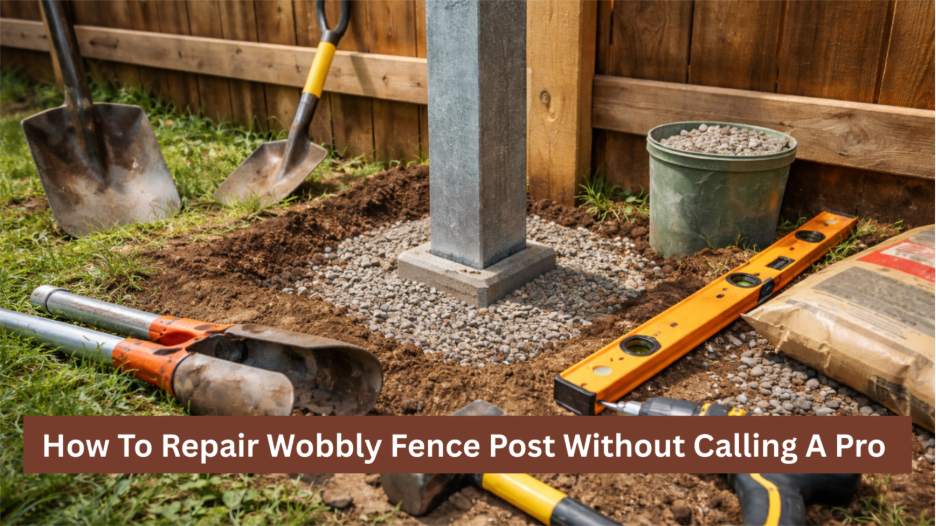
A wobbly fence can be frustrating. One day it is fine, and the next it is leaning every time the wind blows or someone touches it. Over time, that movement can stress panels, loosen fasteners, and make the entire fence look neglected.
The good news is, a shaky post may not mean complete replacement and re-servicing. In many instances, the problem is a case of soil movement, shallow depth of setting, or aging support around the base. With the right steps and materials, you can help restore the stability and life of your fence.
This article describes the process of repairing a wobbly fence post utilizing practical, do-it-yourself methods.
1. Identify Why Post Is Moving

Before you try to fix anything, it is essential to understand the root cause behind the unstable fence post. In most cases, the problem begins below ground level instead of above it. Soil erosion, repeated exposure to moisture, or improper installation depth can result in a weakened base over time.
Next, gently push the post at varying angles. If it can be easily moved at the ground line, the footing may be loose. If the movement is deeper, the soil surrounding the hole may have compacted unevenly. At the same time, metal posts may shift as well if the concrete collar cracks or separates from the post surface.
Once you know what is causing it, the repair of the fence post becomes much more successful. Otherwise, you run the risk of treating the symptom, not the actual problem.
2. Clear and Inspect Base Area
Once the problem has been identified, clear out the area surrounding the post. Remove soil, grass, and debris from the base until you see the footing of the post. This step is useful for determining the depth of the post and whether concrete or compacted gravel was used.
If you spot shallow placement, that can explain the wobble all by itself. Posts generally have to have adequate depth below ground to withstand wind and pressure. In contrast, cracked concrete or gaps between the post and footing indicate that the original support has weakened.
By taking the time to check out the base, you will be able to determine whether reinforcement is adequate or whether partial resetting is needed.
3. Re-Compact or Reinforce Existing Footing

Assuming the post depth is sufficient and the material is not entirely unsound, reinforcement can be the solution. Start by straightening the post and holding it plumb with temporary braces. Then, as it is done, tighten up the surrounding soil or gravel in layers.
For soil-based footings, add crushed stone or gravel and firmly compact it around the post. This method of improvement enhances drainage and decreases future movement. For posts planted in concrete, patching with new concrete can fill in the voids and restore rigidity.
Allow the material to cure or settle completely before removing braces. This step is to make sure that the post remains aligned when placed under pressure.
4. Improve Drainage to Prevent Future Movement
Even a well-repaired post can loosen again if there is constant water collection around the base. Poor drainage is one of the most common causes of fence posts shifting over time. Water softens soil, weakens concrete, and increases the rate of corrosion in metal posts.
To allow good drainage, the soil should be sloped slightly away from the post. Adding gravel near the bottom also helps the water to flow down rather than puddling. In areas of heavy rainfall, this simple adjustment can vastly increase the stability of the post.
By controlling moisture, you help eliminate the possibility of doing the same repair in the future.
5. Reset Post If Necessary

At times, reinforcement is not enough. If the post is too shallow or the footing is severely compromised, resetting may be the best option. While this sounds like a lot of work, it is doable with the aid of basic tools.
Carefully remove the post and old footing material. Dig a hole that is deeper so that the post can firmly be in the hole below the zone of frost or movement. Then, put the post back in place, making sure it is straight, before adding concrete or compacted gravel.
This step creates a stronger foundation and helps prevent future movement more effectively.
6. Protect and Maintain for Long-Term Stability
Once the post is secure, long-term protection becomes the final step. Applying corrosion-resistant finishes or coatings can help metal posts withstand weather exposure. Regularly checking alignment also allows you to address minor shifts before they become major issues.
Additionally, keeping vegetation trimmed around the base prevents moisture buildup and soil disturbance. Over time, these small maintenance habits can make a noticeable difference in fence durability.
With consistent care, your repaired post can remain solid for years without professional help.
Conclusion
Repairing a wobbly fence post does not have to be complicated or expensive. By understanding why the post is moving, inspecting the base carefully, and choosing the right repair method, you can restore stability with confidence. Whether the solution involves reinforcement, improved drainage, or a full reset, each step plays a role in strengthening the foundation.
When combined with simple maintenance and moisture control, these practical repairs can significantly extend the life of your fence. With a bit of effort and attention to detail, you can keep your fence standing straight, secure, and functional for years to come—without relying on professional services.