
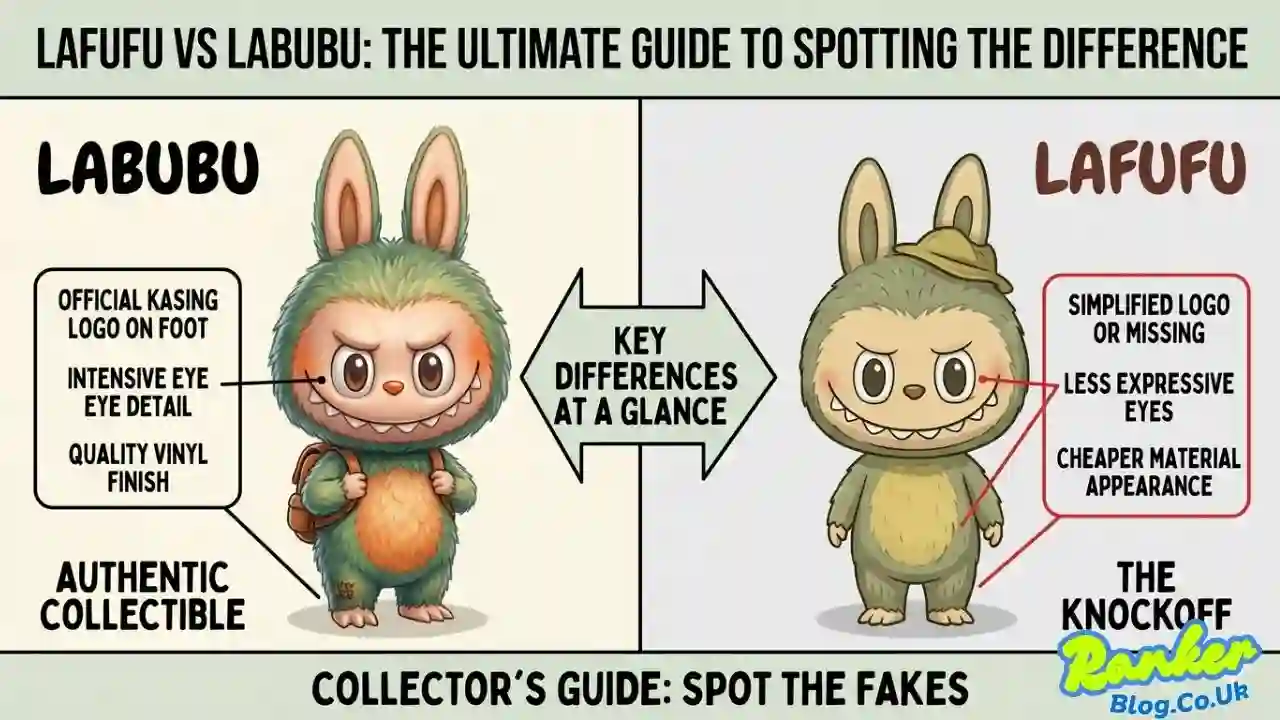
Scroll through TikTok or Instagram for five minutes and there is a good chance you will run into a fluffy little creature with big ears, a wild grin, and enough personality to fill a room. That creature is Labubu — and it has taken the collectibles world completely by storm. But right alongside the real thing, something else has been creeping into feeds, market stalls, and gas station shelves: the Lafufu.
If you have ever found yourself staring at a plush toy and wondering whether it is the genuine article or a knockoff, this guide is exactly what you need. The lafufu vs labubu debate is louder than ever, and understanding the difference between labubu and lafufu could save collectors and casual buyers a lot of money, frustration, and disappointment. Let’s break it all down.
What Exactly Is Labubu?
Before diving into the labubu vs lafufu comparison, it helps to understand where Labubu actually comes from and why people love it so much.
Labubu was created by Hong Kong-born artist Kasing Lung back in 2015. The character was originally inspired by Nordic folklore, which explains its slightly eerie, creature-like energy. With scruffy fur, oversized ears, and a mischievous grin showing exactly nine sharp teeth, Labubu has a look that sits right at the intersection of cute and creepy — and that is a big part of its charm.
In 2019, Kasing Lung partnered with Pop Mart, a Chinese toy retailer well known for its popular blind-box packaging strategy. This collaboration changed everything. Blind boxes mean buyers do not know which specific design they are getting until they open the package, which turns every purchase into a mini surprise. That thrill of the unknown became a huge part of Labubu’s appeal, especially across East and Southeast Asia.
Then came April 2024. Lisa from BLACKPINK posted a photo with her Labubu, and the internet absolutely lost its mind. Practically overnight, the toy went from collector favorite to global phenomenon. Celebrities like Cher, Emma Roberts, Rihanna, Dua Lipa, and Post Malone were all spotted with Labubu figures, cementing its status as the must-have accessory of the era.
So, What Is a Lafufu?
Here is where things get a little complicated — and honestly, a little funny. When people ask “what is a lafufu,” the honest answer is: it is not a real toy brand at all. There is no official figure, no designer, and no company behind the Lafufu name. The term is simply a playful nickname that has been given to counterfeit Labubu figures — fakes that try to cash in on the original’s massive popularity.
The lafufu doll started appearing in large numbers as Labubu demand outpaced supply. Authentic Pop Mart Labubus were selling out within minutes, resale prices were skyrocketing, and frustrated buyers turned to whatever was available. That is when the fakes flooded the market.
Lafufus can be found almost everywhere: on Shein, Temu, AliExpress, at mall kiosks, flea markets, county fairs, and even at gas stations and department stores. The lafufu price is significantly lower than an authentic Labubu, which makes them tempting — especially for parents trying to surprise a child or buyers who just want the aesthetic without the price tag.
And here is the thing — some of these fakes have gone viral for an entirely different reason. With their lopsided eyes, chaotic features, and genuinely bizarre charm, Lafufus became their own kind of lafufu funny internet moment. TikTok is filled with videos of parents gifting kids what they think is a Labubu, only to reveal something wonderfully cursed. That said, buying one expecting authentic quality is where things go wrong.
Some Lafufu designs have even taken on their own weird personalities. There is the so-called lafufu dog version — a knock-off that looks more like a stray animal than a carefully designed collectible. And then there is the bald lafufu, a particularly unfortunate fake that seems to have skipped the fur step altogether during production, leaving buyers with something that looks vaguely like a surprised potato. These variations make labubu lafufu comparisons genuinely entertaining, even if they come at the buyer’s expense.
Lafufu vs Labubu: How to Tell Them Apart
This is the heart of the matter. Whether someone is shopping for themselves or buying a gift, knowing the labubu vs lafufu difference is essential. Here are the clearest ways to spot a fake.
The Teeth Test
This is the quickest and most reliable check. Every authentic Labubu has exactly nine teeth — no more, no less. That specific count is one of the signature design details of the original. A lafufu doll vs labubu comparison often reveals that fakes have eight teeth, ten teeth, or sometimes a completely different arrangement. Before anything else, count the teeth.
Face and Skin Tone
Real Labubu figures have a soft, peachy skin tone that looks natural and warm. The paint finish is smooth and even — a result of the hand-painting process used for official figures. Lafufus tend to go overboard with color. Fakes often show brighter pinks, yellows, or unnatural tones that immediately stand out when placed next to an authentic piece.
Fur Quality
When comparing labubu and lafufu side by side, the fur is one of the most obvious differences. An authentic Labubu has full, dense, evenly distributed fur with a genuinely soft and plush texture. Running a hand over a real one feels noticeably different. A lafufu doll, on the other hand, typically has sparse, patchy fur that feels rough or thin — a clear sign of lower-quality materials.
Eye Details
Look closely at the eyes. On a real Labubu, there is a subtle shiny ridge around the pupil that gives the face depth and life. It is a small detail, but it makes a big visual difference. Most Lafufu versions skip this entirely, resulting in flat, lifeless-looking eyes. The face shape on fakes can also appear uneven or asymmetrical, especially under close inspection.
Foot Stamps and UV Markings
Turn the toy upside down. A genuine Labubu has the Pop Mart logo printed in black on the bottom of the left foot. On the right foot, a UV light will reveal a silhouette of the logo — an anti-counterfeit measure that fakes almost never replicate correctly. This is one of the most definitive tests in any labubu vs lafufu difference check.
Tags, Packaging, and QR Codes
Packaging matters a lot in the labubu vs lafufu box debate. Official Labubu packaging has a matte finish with muted, carefully chosen colors. Fake boxes often look oversaturated or slightly off in design. Inside, every real Labubu comes with a care label and a QR code that, when scanned, takes the buyer directly to the official Pop Mart website.
Check the tag too. A real Labubu tag reads “THE MONSTERS” on both the front and the back. Many Lafufu tags only print this on the front, leaving the back blank or with generic text. The keychain clip is another detail to check — authentic figures consistently have both a proper tag and a clip, while fakes often miss one or both.
The Legal Battle Behind the Lafufu
The lafufu vs labubu difference is not just a consumer issue — it has become a full-blown legal fight. Pop Mart argued that Lafufu toys were close enough to Labubu figures that they infringed on the brand’s trademarks, copyrights, and trade dress.
In July 2025, Pop Mart took serious legal action, filing a lawsuit in California against 7-Eleven and several of its franchisees. The lawsuit accused them of selling counterfeit Labubu products — including Lafufus — through their stores. This move sent a clear message to retailers: stocking fakes is not a gray area.
The case carries broader implications for the designer toy industry as a whole. When a collectible reaches this level of cultural relevance, the line between harmless imitation and IP infringement becomes a major battleground. Creators and brand partners invest heavily in design, quality, and storytelling — and counterfeits undercut all of that.
Why Some People Still Choose Lafufu
Despite all the controversy, interest in Lafufu has not slowed down. In fact, searches for “Lafufu” reportedly soared by 149% in a single month as authentic Labubus kept selling out within minutes of restocking. That tells a very real story about supply and demand.
For many people, the lafufu price point is simply more realistic. A genuine Labubu can command high prices, especially for limited editions. Not everyone can or wants to spend that much on a collectible toy. Lafufus offer the visual vibe of the trend at a fraction of the cost, and for casual fans who are not interested in resale value or collecting, that can be enough.
There is also the ironic charm angle. The lafufu funny factor has given these knock-offs a strange kind of cult following online. People love showcasing their hilariously bad fakes — the bald lafufu, the lopsided lafufu dog edition, the one whose teeth look like a broken fence. It has become its own genre of content.
That said, the ethical side of this deserves a mention. Buying counterfeits does take money away from the original creators and the brand that has invested in building Labubu into what it is today. For anyone who genuinely loves the character and wants to support the artistry behind it, choosing labubu or lafufu is more than just a quality decision — it is a values decision too.
Where to Buy Lafufu (and Where to Find the Real Thing)
For those curious about lafufu where to buy, the options are plentiful — almost too plentiful. Lafufu for sale listings pop up constantly on Temu, Shein, and AliExpress, and physical versions show up at flea markets, mall kiosks, and roadside shops. Prices vary but are generally a small fraction of what a real Labubu costs.
If the question is where to buy lafufu as a novelty, a gag gift, or just for fun, online marketplaces are full of options. Just go in knowing exactly what is being purchased.
For anyone who wants the real deal, here is where to look:
The official Pop Mart website is always the safest bet. Pop Mart also has physical stores in major cities and an official storefront on Amazon for buyers who prefer that platform. When buying from resellers, look for verified seller status and always ask for photos of the foot stamps, tags, and packaging before committing to a purchase.
Avoiding fakes on secondary markets takes a bit of patience. Cross-reference the seller’s listing photos with known authentic details — nine teeth, correct fur quality, proper packaging finish, and a functional QR code. If the price seems unbelievably low for what is supposed to be an authentic piece, it probably is a lafufu.
Final Thoughts: Labubu or Lafufu — Which One Is Right for You?
At the end of the day, the lafufu vs labubu difference comes down to what someone is actually looking for. If the goal is a high-quality collectible from a genuine brand, with design integrity, resale value, and the full Pop Mart experience — the answer is Labubu, every time. Knowing the labubu vs lafufu difference is what separates a smart purchase from a disappointing one.
If the goal is a cheap, fun, slightly chaotic toy to make someone laugh or to jump on a trend without breaking the bank, a lafufu doll might do the job — as long as the buyer knows exactly what they are getting.
Either way, do the homework first. Count the teeth. Check the fur. Scan the QR code. Because in the world of labubu and lafufu, a little knowledge goes a very long way.
Also Read: What Is the Difference Between Jam, Conserve, Marmalade, and Fruit Spread?