
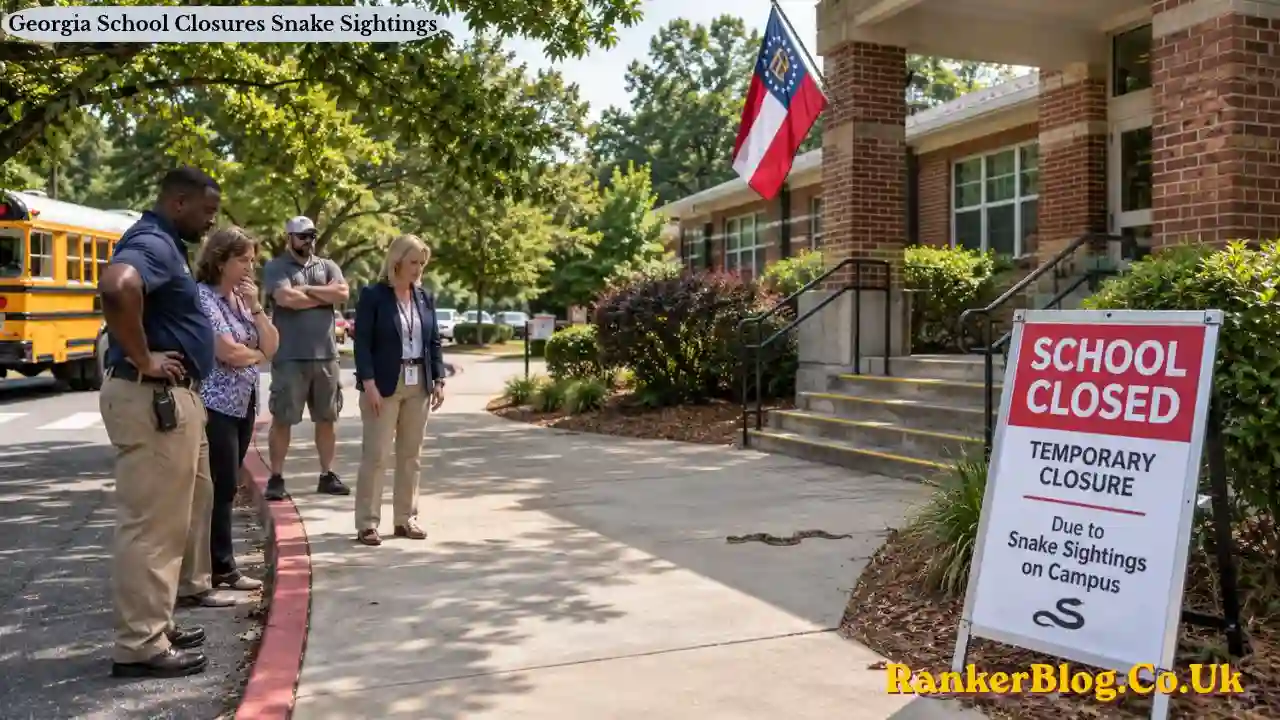
Concerns about Georgia school closures and snake sightings have raised questions about student safety, classroom disruptions, and the possibility of snakes entering schools. Although a snake sighting can lead to temporary classroom evacuations or school closures, reports of widespread closures across Georgia due to snakes remain unverified.
Georgia’s warm climate and diverse wildlife make snake encounters possible throughout the state. Understanding why these encounters happen, how schools respond, and where parents can find reliable information can help families make informed decisions without unnecessary panic.
Georgia School Closures Snake Sightings: What Do We Know?
Snake sightings near school buildings, playgrounds, and outdoor recreational areas can create understandable concerns among parents and teachers. The situation becomes more serious when a snake enters a classroom, hallway or another enclosed space occupied by students.
However, finding a snake on school property does not automatically mean that an entire school must close. School administrators typically assess the circumstances before deciding whether classes should continue, students should relocate, or a temporary closure is necessary.
Parents searching for Georgia school snake closure updates should distinguish between isolated wildlife encounters and officially announced school closures.
Without confirmation from the relevant school district, treat claims about widespread snake infestations or statewide school shutdowns with caution.
Why Are Snakes Appearing in Georgia Schools?
Georgia provides suitable habitats for numerous snake species. Its forests, wetlands, grasslands, and suburban developments allow snakes to live relatively close to residential neighborhoods and educational facilities.
Several environmental factors can increase the possibility of snakes entering school grounds.
Seasonal Changes and Warm Temperatures
Snakes are ectothermic animals, meaning their body temperature depends largely on environmental conditions.
As temperatures rise during spring and summer, many snakes become more active. They move around in search of food, shelter, and suitable breeding environments.
Schools surrounded by wooded areas or open fields may experience occasional wildlife encounters during these periods.
Heavy Rainfall and Flooding
Heavy rain can flood underground shelters and disturb natural snake habitats. When this happens, snakes may move toward drier locations, including garages, storage facilities, and buildings.
School grounds with drainage problems or nearby streams may be more vulnerable to unexpected wildlife encounters following severe weather.
Natural Habitats Near Schools
Many Georgia schools are located near forests, parks, ponds, and undeveloped land. These environments provide natural shelter and food sources for snakes.
Common locations where snakes may hide include:
- Tall grass and overgrown vegetation
- Woodpiles and landscaping materials
- Storage sheds
- Drainage systems
- Spaces beneath portable classrooms
- Areas containing rodents or insects
A snake appearing in one of these locations does not necessarily indicate an infestation.
Building Maintenance Problems
Small openings around doors, damaged foundations, ventilation systems, and utility pipes can provide entry points for wildlife.
Regular building inspections and maintenance can reduce the likelihood of snakes entering classrooms or administrative offices.
Which Georgia Schools Could Be Affected by Snake Sightings?
Any school located near suitable wildlife habitats could experience an occasional snake encounter. However, individual incidents should not be generalized to entire school districts.
Georgia Henry County Schools
Henry County Schools serves communities south of Atlanta, including areas where suburban development exists alongside forests and natural habitats.
Parents looking for information about Georgia Henry County Schools should consult official district communications for any announcements regarding emergency closures, wildlife encounters or changes to school schedules.
No specific snake-related closure within the district has been independently confirmed for this article.
Muscogee County Schools, Georgia
The Muscogee County School District serves students in the Columbus area of western Georgia. Like other districts across the state, its schools operate in environments where occasional wildlife encounters are possible.
Families concerned about snake sightings or school closures should monitor official district notifications rather than relying exclusively on social media posts.
A search for Muscogee County schools in Georgia does not, by itself, establish that the district has experienced snake-related closures.
Common Types of Snakes Found in Georgia
Georgia is home to more than 40 native snake species, including six venomous species. Most snakes found throughout the state are nonvenomous and play an important role in controlling rodent and insect populations.
Understanding the different species can provide useful context, although students should never attempt to identify or handle a snake themselves.
| Snake Species | Venomous? | Common Habitat |
|---|---|---|
| Copperhead | Yes | Woodlands, rocky areas and suburban habitats |
| Cottonmouth | Yes | Wetlands, streams and ponds |
| Eastern diamondback rattlesnake | Yes | Coastal plains and open woodland |
| Timber rattlesnake | Yes | Forests and mountainous regions |
| Pygmy rattlesnake | Yes | Woodlands and wetland margins |
| Eastern coral snake | Yes | Primarily southern Georgia |
| Eastern rat snake | No | Forests, buildings and residential areas |
| Garter snake | No | Gardens, grasslands and moist areas |
Copperhead Snakes
Copperheads are among Georgia’s more commonly encountered venomous snakes. Their natural coloring allows them to blend into fallen leaves and wooded environments.
They may remain motionless when disturbed, making accidental encounters possible.
Cottonmouth Snakes
Cottonmouths are venomous snakes associated primarily with aquatic habitats. They can be found near ponds, streams, marshes and other wet environments within their geographic range.
Schools near natural waterways may encounter various snake species, although not every snake found near water is a cottonmouth.
Nonvenomous Snakes
Rat snakes, garter snakes and several other nonvenomous species are found in Georgia.
These animals help maintain ecological balance by feeding on rodents and other small animals. Although they generally present a lower risk to humans, they can still bite when threatened or handled.
The safest approach is to leave all unfamiliar snakes alone.
Are Snake Sightings in Georgia Schools Dangerous?
The level of danger depends on the snake’s species, location, behavior and proximity to students.
A snake moving through an unoccupied outdoor area presents a different situation from an unidentified snake inside a crowded classroom.
School administrators must consider whether students can safely avoid the affected area and whether professional wildlife removal is necessary.
Children may be particularly vulnerable because curiosity can encourage them to approach unfamiliar animals.
Teaching students to recognize the importance of maintaining distance is more practical than expecting them to distinguish between venomous and nonvenomous species.
Students should treat every unfamiliar snake with caution and immediately inform an adult.
When Can a Snake Sighting Lead to School Closures?
Not every snake encounter requires a school closure. Administrators generally have several options depending on the severity of the incident.
| Situation | Possible School Response |
|---|---|
| Snake spotted outside the school | Restrict access to the immediate area |
| Snake discovered inside a classroom | Relocate students and contact trained personnel |
| Suspected venomous snake | Secure the area and arrange professional removal |
| Repeated indoor snake sightings | Conduct detailed building and wildlife inspections |
| Safety cannot be maintained | Consider temporary closure |
| Wildlife hazard successfully resolved | Resume normal operations following assessment |
A temporary closure may be appropriate when administrators cannot guarantee safe access to classrooms, when multiple areas require inspection or when professional remediation cannot be completed during normal school hours.
These are possible responses rather than a universal policy followed by every Georgia school.
How Georgia Schools Respond to Snake Sightings
Schools are responsible for providing a safe learning environment. When wildlife enters an occupied building, administrators can take several practical steps to protect students and employees.
Securing the Affected Area
The immediate priority is to prevent students from approaching the snake.
Teachers and school staff may relocate students, restrict access to affected rooms and notify administrators.
Moving students away from the animal reduces the possibility of accidental contact while allowing trained professionals to assess the situation.
Professional Wildlife Removal
School employees should avoid attempting to capture potentially dangerous snakes without appropriate training.
Qualified wildlife removal professionals can assess the situation, remove the animal when necessary and identify possible entry points.
Building and Grounds Inspections
After an indoor snake encounter, maintenance teams may inspect doors, windows, foundations, utility openings and nearby landscaping.
These inspections can help identify conditions that allowed wildlife to enter the building.
If repeated sightings occur, a more comprehensive assessment may be necessary to determine whether rodents, structural openings or other environmental factors are contributing to the problem.
Communication With Parents
Clear communication is an important part of managing school safety incidents.
Parents should receive relevant information about any changes to school operations, affected facilities and expected reopening arrangements.
Official communication can also prevent misleading information from spreading through community groups and social media platforms.
How School Closures Affect Students and Families
Even a short school closure can create challenges for families, particularly when the announcement comes unexpectedly.
Working parents may need to arrange alternative childcare, while students may experience disruptions to assignments, examinations and extracurricular activities.
Families may also experience uncertainty about whether the school environment will be safe when classes resume.
Transparent communication and practical contingency plans can help reduce these difficulties.
Georgia Virtual School and Alternative Learning
Georgia Virtual School provides online learning opportunities for eligible middle and high school students.
Digital learning platforms can help maintain educational continuity during certain disruptions. However, enrollment in Georgia Virtual School is not automatically provided whenever a local school closes.
Individual school districts may instead use their existing learning management systems, digital assignments or remote instruction arrangements.
Online Schools in Georgia
Parents interested in longer-term educational alternatives can explore online schools in Georgia, including virtual public school options and private online education providers.
Families searching for free online high schools in Georgia should review eligibility requirements, enrollment periods, accreditation and graduation requirements before selecting a program.
Homeschool programs in GA are another option for families seeking greater educational flexibility. However, an isolated wildlife incident does not necessarily justify changing a student’s entire educational arrangement.
When Does School Start in Georgia After a Closure?
Georgia does not have one universal school calendar that applies to every district. Individual school systems establish their own academic schedules and reopening arrangements.
For families wondering when school starts in Georgia, the regular academic year commonly begins in early or mid-August, although exact dates vary.
Following an emergency closure, reopening depends on the circumstances affecting the school.
Administrators may consider whether the wildlife hazard has been addressed, whether building inspections are complete and whether students can safely return to classrooms.
Parents searching for when Georgia schools start again after a disruption should consult their local district’s official calendar and emergency announcements.
What Should Students Do If They Spot a Snake at School?
Students do not need extensive knowledge of wildlife to respond safely to a snake encounter.
Simple precautions can significantly reduce the risk of injury.
- Remain calm and move away slowly.
- Maintain a generous distance from the snake.
- Never touch, chase or attempt to capture it.
- Immediately inform a teacher or another responsible adult.
- Keep other students away from the affected area.
- Follow instructions provided by school staff.
Even a snake that appears motionless or dead should not be handled.
Most snake encounters can be managed safely when people avoid disturbing the animal.
What Happens If Someone Is Bitten by a Snake?
A suspected venomous snakebite is a medical emergency.
Call 911 immediately, keep the affected person as calm and still as possible, remove rings or other restrictive jewelry near the bite and obtain emergency medical treatment.
Do not apply ice, use a tourniquet, cut the wound or attempt to suck out venom. Never delay medical treatment to capture or photograph the snake.
Prompt professional medical attention is essential.
How Georgia Schools Can Prevent Future Snake Sightings
Although schools cannot completely eliminate wildlife from surrounding natural environments, preventive maintenance can reduce the likelihood of unwanted encounters.
Regular Building Maintenance
Sealing cracks, repairing damaged doors and installing appropriate barriers around utility openings can limit wildlife access.
Routine inspections are particularly useful for older buildings, storage facilities and portable classrooms.
Maintaining School Grounds
Keeping grass trimmed, removing unnecessary debris and managing vegetation near buildings can reduce potential hiding places for snakes.
Schools can also improve drainage and address standing water where appropriate.
Controlling Rodent Populations
Rodents are a natural food source for several snake species.
Proper food storage, responsible waste disposal and professional pest management can make school facilities less attractive to rodents and the wildlife that hunts them.
Wildlife Safety Education
Age-appropriate wildlife education can help students understand how to respond when they encounter unfamiliar animals.
Rather than encouraging fear of snakes, schools can teach children to respect wildlife, maintain safe distances and report potential hazards.
Developing Emergency Response Procedures
A clear response plan allows teachers, administrators and maintenance personnel to act efficiently during unexpected wildlife encounters.
These procedures should establish who secures the area, who contacts professional assistance and how parents receive important updates.
Georgia School Closures and Snake Sightings: Facts vs. Online Rumors
Social media can spread information about school incidents quickly. Unfortunately, photographs, videos and unverified claims can circulate without accurate dates or locations.
An image showing a snake inside a building does not necessarily prove that the incident occurred at a Georgia school.
Similarly, a temporary classroom evacuation should not automatically be described as a schoolwide closure.
Before sharing information, parents should check whether the report identifies a specific school, includes a reliable date and has been confirmed by school administrators or credible local journalists.
Reliable sources of information include official school district websites, the Georgia Department of Education, the Georgia Department of Natural Resources and established local news organizations.
A viral claim is not a substitute for an official school closure announcement.
How Parents Can Stay Updated About Georgia School Closures
Parents can prepare for unexpected school disruptions by registering for their district’s emergency notification system and keeping their contact information current.
Many districts communicate schedule changes through text messages, emails, official websites and verified social media accounts.
Families should also maintain a backup childcare plan and familiarize themselves with their school’s emergency procedures.
When a snake-related incident is reported, parents can contact the school directly to clarify whether classes have been canceled, whether particular areas are restricted, and when normal operations are expected to resume.
Frequently Asked Questions
Did Georgia schools close because of snake sightings?
Snake sightings can result in temporary classroom evacuations or school closures when safety cannot be maintained. However, this article has not independently confirmed widespread Georgia school closures specifically caused by snake sightings.
Which Georgia schools reported snake sightings?
Specific affected schools require verification through official district announcements or reliable local news reports. Parents should avoid assuming that Henry County Schools or Muscogee County Schools experienced closures without supporting evidence.
Why are snakes appearing near Georgia schools?
Georgia’s warm climate, natural habitats, seasonal weather changes and available food sources contribute to snake activity. Schools near forests, wetlands and open fields may occasionally encounter wildlife.
Are venomous snakes common in Georgia?
Georgia has six native venomous snake species, although most snake species found in the state are nonvenomous. Students should avoid approaching any unfamiliar snake regardless of its appearance.
Can a single snake cause a school to close?
Yes, a single snake could justify a temporary closure if administrators cannot isolate the hazard or maintain a safe learning environment. In many situations, restricting access to a particular room or area may be sufficient.
What should children do if they find a snake at school?
Children should move away slowly, avoid touching the snake and immediately report the sighting to a teacher or another responsible adult.
Can students attend Georgia Virtual School during a closure?
Georgia Virtual School offers online education opportunities, subject to eligibility and enrollment requirements. Temporary remote learning during school closures is generally determined by the student’s local school district.
When do Georgia schools start again after emergency closures?
Reopening dates depend on the individual school district and the circumstances behind the closure. Parents should check official school announcements for confirmed information.
How can schools stop snakes from entering classrooms?
Regular building inspections, sealing structural openings, maintaining school grounds, controlling rodents and using professional wildlife management services can reduce the likelihood of indoor snake encounters.
Where can parents find reliable Georgia school closure updates?
Official school district websites, emergency notification systems and established local news organizations are the most appropriate sources for school closure and reopening information.
Final Thoughts
The growing interest in Georgia school closures and snake sightings highlights the importance of wildlife awareness, responsible school maintenance and accurate public communication.
Georgia’s natural environment makes occasional snake encounters possible, but these incidents do not necessarily indicate a widespread infestation or an immediate need to close schools. Appropriate precautions, professional wildlife management and clear emergency procedures can help protect students and staff.
Parents should remain informed without relying on unverified rumors. Schools, meanwhile, can reduce potential risks through preventive maintenance and practical wildlife safety education.
Also Read: Droven IO Tech Education Trends 2026: How AI, Cloud & Skill-Based Learning Are Shaping the Future