
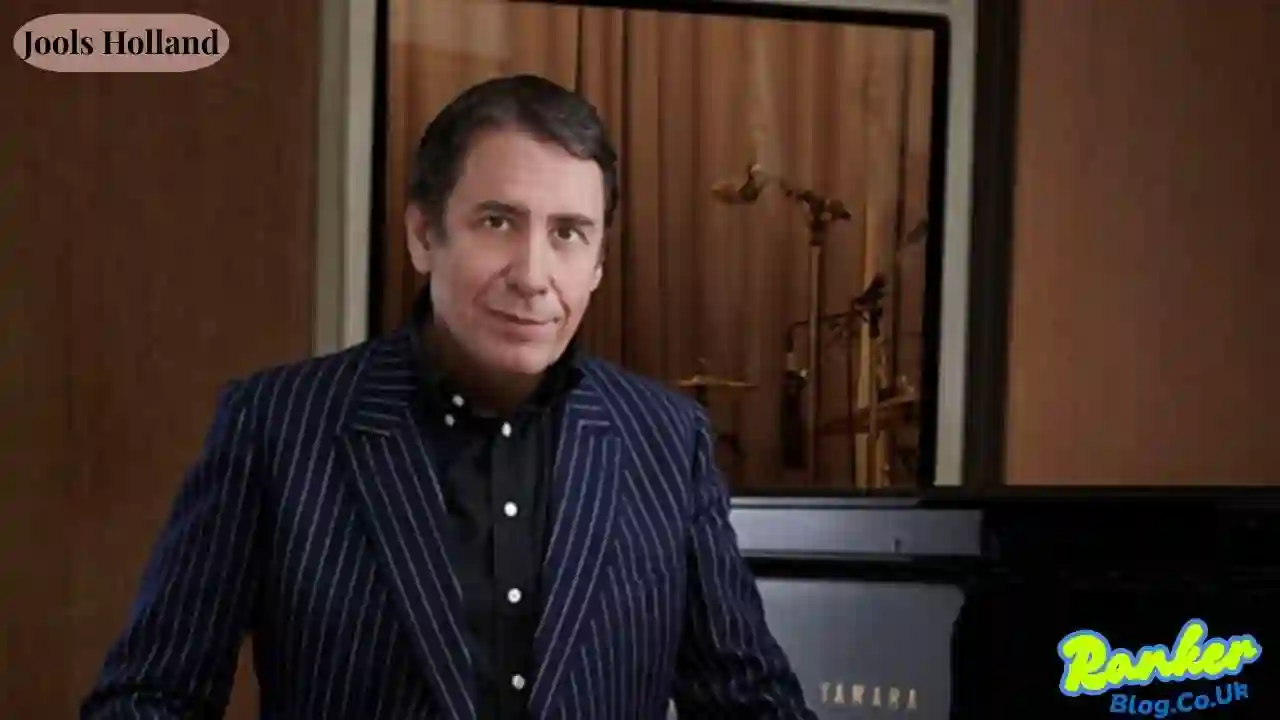
When people talk about the soul of British live music, one name keeps coming up — Jools Holland. Whether someone is tuning in to catch the Jools Holland show on a Friday night or singing along at one of his electric live performances, it is clear that this man has done something truly remarkable: he has stayed at the centre of British music for over five decades without ever losing his spark. From boogie-woogie piano riffs to prime-time television, Jools Holland is one of those rare figures who has managed to be absolutely everywhere — and somehow, still feel like a genuine music lover rather than a celebrity.
Born Julian Miles Holland OBE DL on 24 January 1958 in Blackheath, southeast London, Jools Holland is an English pianist, bandleader, singer, composer, and television presenter celebrated for his mastery of rhythm and blues and boogie-woogie piano styles. His journey — from teenage pub gigs in South East London to a number one album at age 66 — is the kind of story that reminds people why music matters.
Biography Jools Holland
| Category | Details |
|---|
| Full Name | Jools Holland (Julian Miles Holland OBE DL) |
| Date of Birth | 24 January 1958 |
| Age | 68 years old (as of 2026) |
| Birthplace | Blackheath |
| Nationality | British |
| Profession | Pianist, Bandleader, Singer, Composer, Television Presenter |
| Famous For | Hosting Later… with Jools Holland and leading Jools Holland and His Rhythm & Blues Orchestra |
| Music Genres | Rhythm & Blues, Boogie-Woogie, Jazz, Blues |
| Instruments | Piano, Keyboards, Guitar, Vocals |
| Education | Shooters Hill Grammar School |
| Early Career | Began playing piano by ear at age 8 and performed in London pubs as a teenager |
| First Major Band | Squeeze |
| Years Active with Squeeze | 1974–1980, 1985–1990 |
| Notable Squeeze Songs | “Take Me I’m Yours”, “Up the Junction” |
| Solo Career Start | 1980 |
| Orchestra Founded | Jools Holland Big Band (1987), later renamed Rhythm & Blues Orchestra |
| Television Debut | Co-presenter of The Tube |
| Most Famous TV Show | Later… with Jools Holland (since 1992) |
| Famous Annual Special | Jools Holland’s Annual Hootenanny |
| Radio Work | BBC Radio 2 and BBC Radio 3 presenter |
| Notable Collaborators | Eric Clapton, Rod Stewart, Amy Winehouse, Tom Jones, Sting |
| 2024 Achievement | Achieved first UK number one album with Swing Fever |
| Awards & Honours | OBE (2003), Jazz FM Impact Award (2022) |
| Autobiography | Barefaced Lies and Boogie-Woogie Boasts |
| Spouse | Christabel McEwen (married 30 August 2005) |
| Children | George, Rose, and Mabel |
| Residence | Westcombe Park, Blackheath, London |
| Recording Studio | Helicon Mountain Studio |
| Estimated Net Worth | Several million pounds (estimated) |
| Legacy | Influential British musician, broadcaster, and champion of live music culture |
Early Life and Musical Formation
The story of how old Jools Holland is today begins in a terraced house in Blackheath, where a young boy sat down at a piano and simply started playing. By the age of eight, Holland could play the piano entirely by ear, without a single formal lesson to his name. It was a talent that felt almost accidental — and entirely unstoppable.
He attended Shooters Hill Grammar School in southeast London, but his time there was cut short when he was expelled for damaging a teacher’s car. Rather than returning to formal education, Holland made a decision that would define his life: he dropped out entirely and devoted himself to music. By his early teens, he was already performing regularly in pubs across South East London and the East End Docks, honing a style that was raw, joyful, and deeply rooted in the American blues and boogie-woogie tradition.
It was an unconventional beginning, but it laid the groundwork for everything that followed.
Career with Squeeze (1974–1980 and 1985–1990)
At around 15 years old, Holland met Glenn Tilbrook and Chris Difford, and the three of them co-founded the new wave band Squeeze in 1974. The band would go on to gain international fame with hits like “Take Me I’m Yours” and “Up the Junction,” becoming one of the defining acts of the British new wave era.
Holland played keyboards on the band’s first three albums — Squeeze, Cool for Cats, and Argybargy — before departing in 1980 to pursue a solo career. It was a bold move for someone so young, but Holland had always been driven by curiosity rather than comfort.
Squeeze regrouped unexpectedly in 1985, and Holland returned to the fold as their keyboard player. He remained with the band until 1990, at which point he again stepped away to resume his solo career as both a musician and a television host. His time with Squeeze gave him a foundation, but it was never going to be the whole story.
Solo Career and Musical Style
After leaving Squeeze in 1980, Holland formed Jools Holland and His Millionaires, marking the beginning of his solo journey in earnest. The band released one album before disbanding, but it cemented Holland’s identity as a solo performer with his own distinct artistic vision.
During this period he also worked as a session musician for a range of artists, including Wayne County & the Electric Chairs and The The — contributing his signature piano style to projects that had nothing to do with his own name on the marquee. This willingness to collaborate and support other musicians would become one of the defining traits of his career.
His musical identity is rooted deeply in rhythm and blues and boogie-woogie piano. He plays piano, keyboards, and guitar, and sings — a multi-talented performer whose love for the music always comes before the performance of it.
Jools Holland and His Rhythm & Blues Orchestra
In 1987, Holland formed what would become his most enduring musical project: the Jools Holland Big Band, built alongside Gilson Lavis from Squeeze. Over the years the group grew steadily, eventually being renamed Jools Holland and His Rhythm & Blues Orchestra — and it is this band that most people today associate with the Jools Holland name.
The Jools Holland band is no small operation. The orchestra consists of 19 musicians playing saxophones, trumpets, trombones, and more, creating the kind of full, warm sound that fills rooms and makes people want to dance. By 2022, the ensemble had grown into a 17-piece touring orchestra that included singers Louise Marshall and Ruby Turner, Holland’s own daughter Mabel Ray, and his younger brother Christopher Holland on keyboards. There is something wonderfully family-like about the whole enterprise — in the most literal sense.
Jools Holland upcoming events regularly feature the full orchestra on tour across the UK and beyond, with fans attending year after year for what feels more like a celebration than a concert.
Notable Collaborations
One of the most striking things about Jools Holland’s career is the sheer range of artists he has worked with. Holland has collaborated with musical legends including Eric Clapton, Rod Stewart, Amy Winehouse, Sting, George Harrison, David Gilmour, Ringo Starr, and Bono — a list that reads less like a musician’s resume and more like a who’s who of popular music history.
In 2004, he worked with Welsh singer Tom Jones on a joint album, providing piano accompaniment and sharing vocals on classic standards like “Life’s Too Short” and “Glory of Love.” It was a partnership that felt natural — two performers who genuinely loved the music they were making together.
In 2024, Holland co-led Rod Stewart’s swing album Swing Fever, contributing piano, arrangements, and ensemble leadership across 13 classic tracks including “Ain’t Misbehavin’” and “Night Train.” That album became Jools Holland’s first UK number one — a milestone that arrived when he was 66 years old and showed no signs of slowing down. When people ask how old is Jools Holland, the answer almost feels beside the point — his energy suggests someone perpetually in their prime.
Holland was also part of the ensemble of musicians who performed at the Concert for George in November 2002, a tribute concert celebrating the music of George Harrison. It was a moment that underlined just how trusted and respected he had become among the very highest tier of British and international musicians.
Later with Jools Holland: The Show That Changed Television
If there is a single thing that has made Jools Holland a household name, it is Later… with Jools Holland. Since 1992, he has hosted this iconic music programme on BBC2, and it has become the longest-running live music show on British television. When people ask what channel is Jools Holland on, the answer is BBC2 — and has been for over three decades.
Where is Later with Jools Holland filmed? The show is recorded at BBC Television Centre in London, with multiple artists performing in the round in the same space — creating an atmosphere that feels more like a shared musical session than a formal broadcast. Where is Jools Holland filmed, more broadly, depends on the occasion: touring shows, live broadcasts, and special events have taken him to stages across the UK and the world.
People tune in week after week to catch the Jools Holland show not because it tells them what is popular, but because it shows them what is good. The programme has helped launch the careers of countless artists and has introduced audiences to music they might never have stumbled across otherwise.
What time is Jools Holland on tonight? For current scheduling, the BBC’s official website is always the best place to check. What time does Jools Holland start can vary by episode and special event, so checking BBC listings the day of broadcast is always the most reliable approach. Who is on Jools Holland tonight is similarly something that changes each week, making each episode a genuine surprise even for longtime viewers. Is Jools Holland live? The show features live performances, though some elements are pre-recorded — a common question with a nuanced answer.
Jools’ Annual Hootenanny: A New Year’s Eve Institution
Ask anyone in Britain what they watch on New Year’s Eve, and a huge number of them will say the Jools Holland Hootenanny. This annual BBC special has become one of the most beloved fixtures in the television calendar — a warm, joyful send-off to the year gone by and a musical welcome to whatever comes next.
The Jools Holland Hootenanny 2025 continued this tradition, bringing together a typically eclectic mix of artists from across musical genres for a night of live performance and celebration. Is Jools Holland Hootenanny live? This is a question many viewers ask, and the answer has historically involved some pre-recording: the Hootenanny is typically filmed in advance — usually in late November or early December — but broadcast on New Year’s Eve to create the atmosphere of a live celebration. When is Jools Holland Hootenanny filmed is therefore usually several weeks before it actually airs.
The Jools Holland Hootenanny 2026 is something fans are already looking forward to, as the programme has rarely disappointed in its three-decade run. The combination of Holland’s warmth as a host, the Rhythm & Blues Orchestra, and a lineup of guests spanning pop, jazz, folk, and rock makes it unlike anything else on television.
Television Career: From The Tube to BBC2
Before Later…, there was The Tube. Holland’s TV career began in the early 1980s when he co-presented the Channel 4 music programme from Newcastle — a show that quickly developed a cult following and helped define a generation’s relationship with music television.
Holland’s time on The Tube was not without incident. He famously achieved notoriety by accidentally using strong language in a live early-evening trailer for the show, which resulted in a six-week suspension from the programme. He later referenced the episode in his sitcom The Groovy Fellers, turning it into comedy rather than catastrophe. It is the kind of story that only adds to the sense that Holland has always been more human than polished — and that is precisely why audiences trust him.
Between 1988 and 1990, Holland also crossed the Atlantic to co-host the NBC late-night music performance programme Sunday Night alongside David Sanborn — a rare British presence on American late-night television, and a sign of just how highly regarded he had become internationally.
Radio Work
Alongside his television career, Jools Holland has been a consistent presence on British radio. He regularly hosted the programme Jools Holland on BBC Radio 2, a warm and eclectic mix of live and recorded music with general conversation, studio guests, and members of his orchestra dropping in to play.
He currently hosts Earlier with Jools Holland on BBC Radio 3 every Saturday — a programme that reflects the same broad musical curiosity that has defined his entire career, blending jazz, blues, folk, and beyond into a show that feels genuinely personal.
Awards and Recognition
Over the course of a career spanning more than five decades, Jools Holland has accumulated recognition that reflects both his artistic achievement and his contribution to the wider musical ecosystem. He was awarded the Order of the British Empire (OBE) in 2003 for his services to the British music industry — an honour that acknowledged not just his own performances, but his role in nurturing and presenting other artists.
In 2022, he received the Jazz FM Impact Award for his contribution to music broadcasting and live performance. And in 2024, as already noted, he achieved his first UK number one album with Swing Fever alongside Rod Stewart — a moment of commercial recognition that arrived late but was no less deserved for that.
Authorship and Other Pursuits
Jools Holland is more than a musician and television presenter — he is a published author, a music historian, and a man of genuinely wide-ranging interests. His 2007 autobiography, Barefaced Lies and Boogie-Woogie Boasts, was named BBC Radio 4’s “Book of the Week” and was read aloud on air by Holland himself. It is a book that reveals the same warmth and humour that characterises his on-screen presence.
Beyond that, Holland has written forewords for music venues, contributed essays to magazines like Mojo, and provided liner notes for album reissues — consistently blending scholarly insight with entertaining storytelling in a way that makes even the most technical musical history feel accessible.
Perhaps most unusually, Holland built his own recording studio — Helicon Mountain — in Blackheath, where he has lived for much of his life. The studio was designed to his own specifications and inspired by the village of Portmeirion, the setting for the classic 1960s TV series The Prisoner. Holland owns costumes and props from the series, and his studio reflects the same sense of playful individualism that runs through everything he does.
Jools Holland Wife, Family, and Personal Life
Away from the spotlight, Jools Holland is a family man with deep roots in the part of London where he grew up. Is Jools Holland married? Yes — on 30 August 2005, Holland married Christabel McEwen at St James’ Church in Cooling. She is a sculptor and the daughter of folk singer and botanical artist Rory McEwen. The couple have a daughter, Mabel, born in 1991. Holland also has two children — George and Rose — from his previous relationship with Mary Leahy.
Where does Jools Holland live? He lives in the Westcombe Park area of Blackheath in South East London — the same part of the city where he grew up and first started playing music, a satisfying full-circle for a man whose career has taken him around the world.
Jools Holland Net Worth
Jools Holland net worth is a topic of natural curiosity given his decades-long career in music, television, and broadcasting. While exact figures are not publicly confirmed, estimates place his net worth in the range of several million pounds, reflecting a career that has included record sales, extensive touring with the Rhythm & Blues Orchestra, decades of television presenting fees, radio work, and publishing. His 2024 number one album with Rod Stewart would have added meaningfully to that picture.
Legacy: A Bridge Between Music’s Past and Present
Jools Holland legacy is not easy to summarise in a single sentence, because it operates on several levels simultaneously. As a pianist, he kept boogie-woogie and rhythm and blues alive in mainstream British culture at a time when those styles were not exactly fashionable. As a bandleader, he built one of the most respected touring orchestras in the country. And as the host of Later… with Jools Holland for over three decades, he helped launch the careers of artists across every genre, creating a space where music could be heard on its own terms.
As co-founder of Squeeze, bandleader of his Rhythm & Blues Orchestra, and host of Britain’s longest-running live music show, Jools Holland remains one of the most influential figures in British music. He is, in the truest sense, a custodian of the live music tradition — someone who genuinely believes that the best thing you can do with a song is play it in a room full of people and watch what happens next.
Also Read: Chris Tarrant The Man Who Made Britain Ask Is That Your Final Answer?