
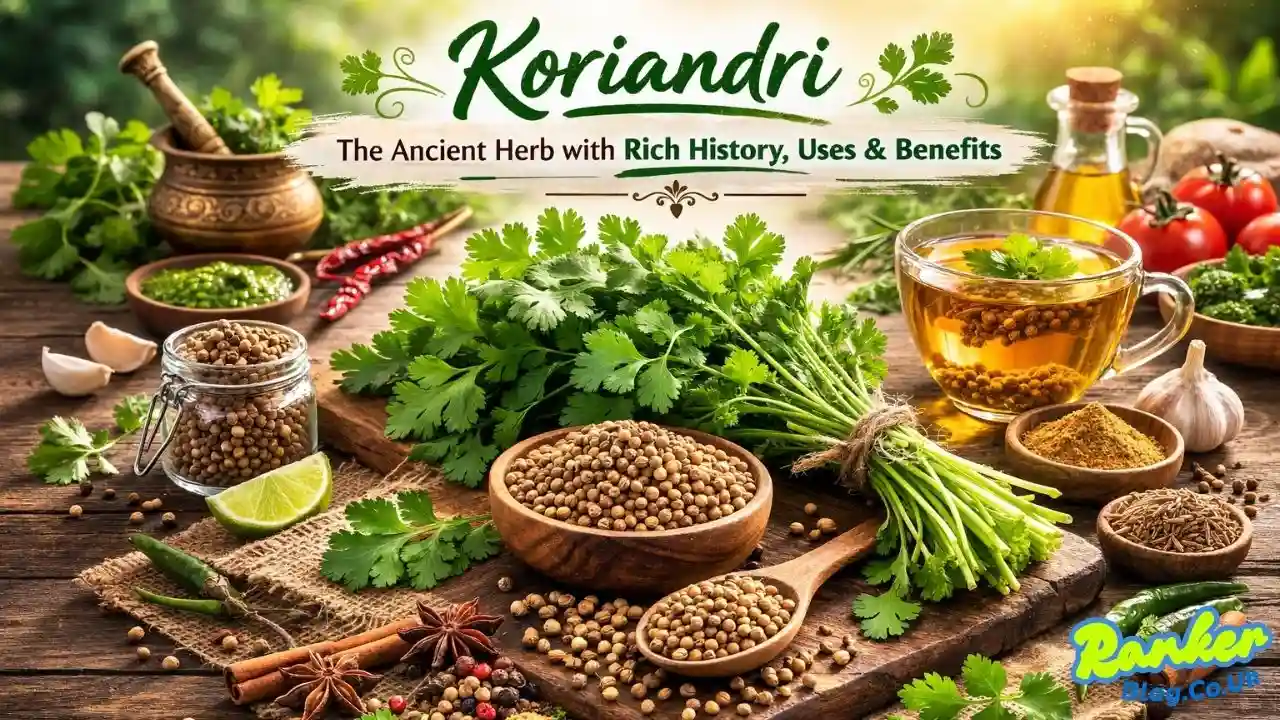
What Is Koriandri?
Koriandri is not the name of a completely different plant. In Estonian usage, koriander is the word for coriander, while koriandri is a grammatical form of that word.
The plant itself is widely known as coriander and, in some English-speaking regions, cilantro when referring specifically to the fresh leaves. Its scientific name is Coriandrum sativum.
Coriander is a highly versatile herb and spice because several parts of the same plant can be used in cooking. The fresh leaves have a bright and distinctive flavor, while the dried seeds provide a warmer and more aromatic taste.
Koriandri Meaning in Simple Terms
For someone searching for the Koriandri meaning, the simplest explanation is that it refers to coriander in Estonian language usage.
The word can therefore appear unfamiliar to English-speaking readers even though it is connected to a very familiar culinary ingredient.
The term should not automatically be interpreted as the name of a new superfood, unusual plant, or separate spice. In most food-related contexts, the subject is coriander.
Koriandri and Coriander: Are They the Same?
Yes. In the relevant culinary and botanical context, Koriandri and coriander refer to the same plant.
The main difference is the language and grammatical form being used. The botanical identity remains Coriandrum sativum.
This distinction becomes especially useful when reading recipes, ingredient lists, gardening information, or translated cooking content.
Although the plant remains the same, the word coriander can sometimes refer to the entire plant, the fresh leaves, or the dried seeds depending on the country and context.
What Does Koriandri Taste Like?
Fresh coriander has a distinctive flavor that many people describe as fresh, green, citrusy, grassy, peppery, and aromatic.
However, not everyone experiences the herb in the same way. Some people perceive fresh coriander as having a strong soapy or unpleasant flavor.
This difference in perception has been investigated scientifically, particularly in relation to genetic variation affecting how certain aromas are detected.
That is one reason coriander can be a favorite ingredient for one person and something they strongly dislike for another.
Why Does Koriandri Taste Like Soap to Some People?
The famous “soap taste” associated with coriander is not simply a matter of someone having an unusually sensitive tongue.
Researchers have found associations between genetic differences and how people perceive certain aroma compounds found in coriander leaves. Some people appear more likely to detect particular aldehyde-related smells that can contribute to the soapy sensation.
Genetics is not the only factor involved. Food preferences, cultural exposure, familiarity, and repeated consumption can also influence how someone experiences an ingredient.
Fresh Koriandri vs. Coriander Seeds
Fresh coriander leaves and coriander seeds come from the same plant, but they have very different culinary characteristics.
| Feature | Fresh Coriander Leaves | Coriander Seeds |
|---|---|---|
| Common name | Cilantro | Coriander seeds |
| Flavor | Fresh, green, citrusy | Warm, aromatic, slightly nutty |
| Typical use | Garnishes, chutneys, salads, sauces | Curries, spice blends, marinades |
| Preparation | Chopped, blended, or used whole | Whole, crushed, roasted, or ground |
| Cooking role | Fresh finishing ingredient | Spice used during cooking |
Knowing this difference is important because these ingredients are not interchangeable in most recipes.
Replacing fresh leaves with coriander seeds can completely change a dish, while using fresh leaves in place of ground coriander usually produces a very different flavor.
How Koriandri Is Used in Cooking
Koriandri, or coriander, is one of those ingredients that can be used in several different ways.
Fresh leaves can be added to curries, salads, chutneys, soups, rice dishes, sauces, grilled foods, tacos, and vegetable dishes.
The leaves are often used near the end of cooking because their fresh aroma is one of their main characteristics.
Coriander seeds are used differently. They can be added whole, crushed, roasted, or ground before being incorporated into a recipe.
Their warm and aromatic flavor works particularly well with meats, legumes, vegetables, rice dishes, curries, pickled foods, and spice blends.
Using Fresh Koriandri
Fresh coriander is especially useful when a dish needs brightness and freshness.
You can use chopped leaves in:
- Green chutney
- Tomato and onion salad
- Lentil dishes
- Curries
- Rice dishes
- Salsa
- Soups
- Yogurt sauces
- Grilled meats
- Roasted vegetables
For many recipes, adding the leaves shortly before serving helps preserve their fresh character and aroma.
Using Coriander Seeds
Coriander seeds have a deeper flavor than fresh coriander leaves.
Whole seeds can be added directly to dishes, while lightly toasted seeds can be crushed or ground to release more aroma.
Ground coriander is commonly used in spice mixtures and can add warmth without the intense heat associated with chili peppers.
It works well with ingredients such as cumin, ginger, garlic, chili, citrus, vegetables, legumes, and meat.
Koriandri in South Asian Cuisine
Coriander has an especially important role in South Asian cooking.
Fresh leaves are commonly used as a finishing ingredient for curries, daal, chaat, kebabs, rice dishes, chutneys, and sauces.
The fresh herb creates a contrast with rich gravies and roasted spices. Its bright flavor can make a hearty dish taste lighter and fresher.
Ground coriander seeds are also widely used in South Asian spice blends. They provide depth, warmth, and aroma without adding the same level of heat as chili.
This makes coriander a particularly useful ingredient because the leaves and seeds can both contribute to completely different parts of a meal.
Koriandri Around the World
Coriander is used across many culinary traditions around the world.
Fresh coriander leaves appear in dishes ranging from South Asian curries and chutneys to Mexican salsas and a variety of soups, sauces, salads, and rice dishes.
The seeds have their own international role and can be found in spice blends, marinades, preserved foods, meat dishes, and vegetable recipes.
The plant’s versatility has helped make coriander an important ingredient across many different food cultures.
Koriandri Nutrition
Fresh coriander is a low-calorie herb, and it is normally consumed in relatively small quantities.
The leaves provide useful nutrients and plant compounds, although the exact nutritional contribution depends on how much is eaten.
Coriander seeds have a different nutritional profile because they are dried and more concentrated. They contain dietary fiber along with various minerals and other naturally occurring compounds.
It is best to think of coriander as a nutritious food ingredient that complements an overall balanced diet rather than as a miracle health food.
Does Koriandri Have Health Benefits?
Coriander has a long history of culinary and traditional use.
Fresh leaves can contribute nutrients to meals, while coriander seeds contain various plant compounds that have been studied in nutritional and scientific research.
Researchers have explored coriander for properties such as antioxidant activity and possible metabolic effects. However, laboratory findings and traditional uses should not automatically be treated as proof that coriander can prevent or cure diseases.
The practical benefit of coriander is straightforward: it is a flavorful plant ingredient that can make nutritious foods more enjoyable to eat.
Can Koriandri Help Digestion?
Coriander has traditionally been associated with digestive uses in different food and herbal traditions.
However, traditional use is not the same as clinical evidence for treating a digestive disorder.
People experiencing ongoing stomach pain, severe bloating, persistent reflux, or other digestive symptoms should not rely on herbs alone and should seek appropriate medical advice.
Is Koriandri Safe to Eat?
For most people, coriander is a normal culinary herb and spice.
Like many foods, however, coriander can cause an allergic reaction in some individuals.
A food allergy can cause symptoms such as itching, hives, swelling, vomiting, breathing problems, or more severe reactions.
Anyone who already knows they have a coriander allergy should avoid the ingredient and take appropriate precautions.
It is also important to distinguish between a food allergy and food intolerance, as they are different conditions.
How to Choose Fresh Koriandri
When buying fresh coriander, look for bunches with:
- Bright green leaves
- Fresh, firm stems
- Minimal yellowing
- No slimy sections
- No obvious black or decaying areas
- A fresh herbal aroma
Avoid heavily wilted bunches whenever possible.
Because fresh coriander is delicate, purchasing smaller quantities can be more practical if you do not use herbs frequently.
How to Store Fresh Koriandri
Fresh coriander generally keeps better when moisture and airflow are managed properly.
Remove damaged leaves and avoid storing the herb while it is excessively wet.
One simple approach is to loosely wrap the herb in a slightly damp paper towel before placing it inside a suitable container or bag in the refrigerator.
The objective is to prevent the leaves from drying out while also avoiding excessive moisture that can encourage sliminess and decay.
Coriander can also be frozen for longer storage. Frozen leaves may lose some of their fresh texture, but they can still work well in cooked dishes, sauces, curries, and chutneys.
How to Grow Koriandri at Home
Koriandri, or coriander, is a practical herb for home gardening.
The plant is an annual, meaning it completes its life cycle during one growing season.
A basic growing setup requires:
Good light: Choose a bright location suited to the local climate.
Well-drained soil: Avoid soil that remains constantly waterlogged.
Consistent watering: Young plants need regular moisture without excessive standing water.
Regular harvesting: Pick young leaves as needed to encourage continued use of the plant.
If the plant is allowed to mature and flower, it can eventually produce the fruits commonly harvested and dried as coriander seeds.
One challenge for home gardeners is that coriander may move toward flowering relatively quickly in warm or stressful conditions. This can shorten the period during which the plant produces large quantities of tender leaves.
Common Mistakes When Using Koriandri
Confusing Leaves With Seeds
Fresh leaves and coriander seeds come from the same plant but have completely different flavor profiles.
Always check whether a recipe is asking for leaves, whole seeds, or ground coriander.
Cooking Fresh Leaves for Too Long
Long cooking can reduce the fresh aroma of coriander leaves.
When a recipe is designed around the herb’s fresh character, adding some of the leaves toward the end can produce a brighter result.
Buying Too Much Fresh Coriander
A huge bunch may look convenient, but coriander can spoil quickly.
Buying smaller quantities is often a better approach if you do not cook with the herb regularly.
Using Too Much Ground Coriander
Ground coriander is aromatic and versatile, but adding too much can overwhelm more delicate flavors.
Start with the recommended amount and adjust gradually according to the recipe.
Koriandri vs. Cilantro vs. Coriander
One of the biggest sources of confusion is the difference between Koriandri, cilantro, and coriander.
In North American English, the word cilantro generally refers to the fresh leaves, while coriander commonly refers to the dried seeds.
In other English-speaking regions, coriander can refer to the plant as a whole as well as its fresh leaves.
The Estonian term adds another linguistic difference because koriander is the dictionary form while koriandri is a grammatical form.
This means the best way to understand the ingredient is to consider both the language and the cooking context.
Why the Word Koriandri May Appear Online
Someone unfamiliar with Estonian may encounter “Koriandri” and assume it is the name of a separate herb.
That assumption can lead to confusing search results and inaccurate explanations.
The more useful way to understand the term is to connect it with koriander, the Estonian word associated with coriander.
From a botanical perspective, the relevant plant is still Coriandrum sativum.
This makes “Koriandri” primarily a terminology and language question rather than the discovery of an entirely separate ingredient.
Frequently Asked Questions About Koriandri
What does Koriandri mean?
Koriandri is a grammatical form associated with the Estonian word for coriander. It refers to the familiar coriander plant rather than a separate species.
Is Koriandri the same as cilantro?
Yes, in the botanical sense it refers to the same plant. In American English, cilantro usually means the fresh leaves of the coriander plant.
What is the scientific name of Koriandri?
The plant associated with Koriandri is Coriandrum sativum.
Why does coriander taste like soap to some people?
Differences in genetic makeup can affect how individuals perceive certain aromatic compounds found in coriander leaves. Some people are therefore more likely to experience a strong soapy flavor.
Can you eat Koriandri every day?
Coriander can be part of a normal varied diet for most people. Anyone with a known or suspected allergy to coriander should avoid it and seek suitable medical advice.
Final Thoughts on Koriandri
Koriandri is best understood as a form of the Estonian word associated with coriander, the familiar herb and spice known scientifically as Coriandrum sativum.
The plant is valuable because it offers several culinary possibilities. Fresh leaves provide a bright and aromatic finish, while the seeds bring warmth and depth to cooked dishes and spice blends.
For anyone cooking with Koriandri, the most important distinction is knowing whether the recipe calls for fresh leaves, whole coriander seeds, or ground coriander.
Once that distinction is clear, the term becomes much easier to understand and use in everyday cooking.
Also Read: Best Ensalada Primavera Near Me: A Complete Guide to Finding Fresh and Delicious Ensalada Primavera