
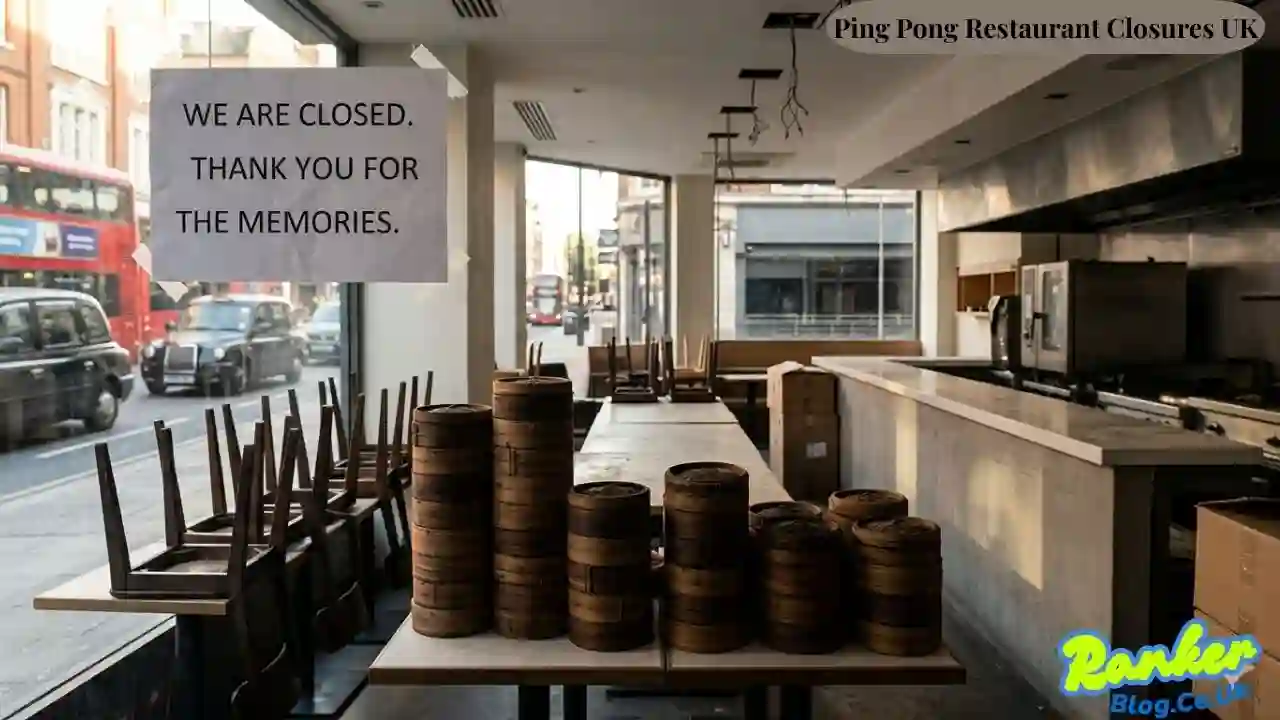
London diners scrolled their phones one July morning in 2025 and found something that stopped many of them mid-sip. The Instagram page of one of the city’s most recognisable dim sum chains had posted a farewell message — quiet, heartfelt, and final. No warning, no countdown, no farewell dinner. Just a simple “It’s a wrap.” For thousands of regulars who had shared steaming baskets of dumplings across Ping Pong’s signature tables, the Ping Pong restaurant closures UK announcement hit harder than expected.
This is the full story of how a dining institution that helped redefine casual Chinese food in Britain rose to its peak, battled through crisis, and ultimately closed its doors for good.
The History of Ping Pong: A Dim Sum Dream in Soho
Ping Pong was founded in London’s Soho in 2004 by restaurateur Kurt Zdesar. From the very beginning, the concept stood out. Rather than positioning itself as a traditional Chinese restaurant, it offered dim sum in a stylish, approachable setting — steamed bao, crispy spring rolls, and perfectly folded har gow served alongside lychee cocktails and a buzzing social atmosphere.
The formula worked almost immediately. Within just four years of launch, the business had expanded to operate 13 restaurants across the capital. That kind of growth in London’s notoriously competitive hospitality market was remarkable, and it turned Ping Pong into a genuine household name among city diners.
The brand became synonymous with a particular kind of London night out. Whether it was a first date in Soho, a birthday bottomless brunch on the Southbank, or a casual after-work drinks-and-dumplings situation at St. Christopher’s Place, Ping Pong found its way into people’s personal rituals. It was more than a restaurant — it was a setting for memories.
The Beginning of the Decline: How the Cracks Appeared
Despite its early success, the years following peak expansion were not kind to the Ping Pong UK restaurant closure story that was slowly building beneath the surface.
By late 2022, the business had significantly reduced its footprint, operating just six London restaurants and a central production kitchen — down from its peak of 13 locations — and employed 255 staff members. The contraction reflected mounting pressure across the mid-range dining sector, but Ping Pong’s troubles ran deeper than the industry average.
In November 2022, the group appointed administrators Begbies Traynor and completed a pre-pack sale of the business to three of its company directors for £3.21 million on the same day. A report from Begbies Traynor confirmed that the onset of the COVID-19 pandemic had caused “significant disruption” to the business. To survive the worst of it, the company had been kept afloat by a £500,000 loan — a lifeline that bought time but could not reverse the structural pressures building around it.
The pandemic did not create Ping Pong’s vulnerabilities, but it accelerated them considerably. Forced closures, reduced capacity, staff shortages, and a collapse in city-centre footfall exposed just how fragile even a well-loved brand could be when the environment turned hostile.
The Final Ping Pong UK Restaurant Closure: July 2025
After a brief period of stabilisation under new directorial ownership, hopes were that a leaner Ping Pong could survive in a post-pandemic London. Those hopes did not hold.
In July 2025, the group confirmed in a statement posted to Instagram that all Ping Pong restaurants — including sites in Soho, Southbank, Bow Bells House, and St. Christopher’s Place — were now permanently closed. No specific financial or operational reason was stated publicly at the time.
The farewell message thanked customers warmly for 20 years of shared memories: dim sum dates, happy hours, bottomless brunches, and catch-ups with friends. It thanked collaborators, suppliers, and the team who, in the brand’s own words, “kept the steam going.” The tone was proud, gracious, and — for many readers — unexpectedly moving.
For a brand that had built its identity on togetherness and shared food, the social media goodbye felt oddly fitting. But behind the warm words, the reality was a business that had run out of road.
Key Reasons Behind the Ping Pong Restaurant Closures UK
Understanding why ping pong restaurant closures UK happened requires looking at several converging factors, not a single dramatic moment.
A Controversial Pricing Experiment
In 2024, Ping Pong trialled a mandatory 15% discretionary “brand charge” on all bills. The intention was to offset rising wage costs in a way that complied with incoming legislation, but the execution was deeply problematic. Customers felt the fee was an opaque mechanism for increasing prices without a corresponding improvement in service. The backlash was swift and public, leading to reputational damage and a measurable drop in footfall.
Legislative Pressure from the Tips Act
The UK government’s Employment (Allocation of Tips) Act placed strict requirements on how businesses could handle service charges, prohibiting employers from withholding any portion from staff. While the intention was to protect workers, it put additional pressure on operators who had structured their cost models around flexible service charge income. For Ping Pong, navigating this change while maintaining profitability proved an enormous challenge.
Staff and Customer Alienation
The brand charge controversy had a double effect. Customers felt deceived; staff felt worse off. Workers voiced concerns that the new model actually reduced their effective take-home pay compared to traditional tipping arrangements. When a brand loses trust on both sides of the counter simultaneously, recovery becomes very difficult.
Changing Consumer Habits
Post-pandemic dining culture shifted meaningfully. Many Londoners gravitated toward smaller, independent venues — places with distinct personalities, local sourcing stories, and flexible pricing. Chain restaurants, however beloved, found themselves competing against a resurgence of independent hospitality that felt more authentic to a generation increasingly sceptical of corporate dining.
Broader Economic Pressures
Rising energy costs, food inflation, increased national living wage obligations, and stubbornly high London rents all squeezed margins across the mid-range dining sector throughout 2023 and 2024. Ping Pong was not alone in facing these challenges, but its structural weaknesses made it less resilient than competitors with stronger balance sheets.
Founder’s Reaction and Industry Response
Although Kurt Zdesar left Ping Pong in 2007, he was not silent when the chain finally folded. He acknowledged the grim economic landscape facing UK hospitality, describing the environment as “increasingly difficult to survive” in. His words reflected a genuine sense of loss for a business he had brought to life two decades earlier.
Hospitality analysts were less surprised than the general public. Many had watched Ping Pong’s post-administration trajectory with concern, noting that the 2022 pre-pack sale had resolved immediate debts but had not addressed the structural questions around long-term viability. The brand charge misstep, in particular, was widely seen as a strategic error that accelerated an already difficult trajectory.
Social media, meanwhile, was filled with genuine tributes. Former regulars shared photographs of old meals, tagged long-lost friends they had once shared a table with, and wrote messages that read less like restaurant reviews and more like eulogies for a particular chapter of their London lives.
What the Closures Mean for the UK Restaurant Industry
The ping pong UK restaurant closure is not simply the story of one brand. It is a case study in the fragility of mid-range dining in Britain at a time of compounding economic and cultural pressures.
Even popular, recognisable restaurants are not immune to these forces. Ping Pong had name recognition, a loyal customer base, and two decades of goodwill built up across the capital. None of that was sufficient when faced with the combination of post-pandemic recovery costs, legislative change, a pricing misstep, and shifting diner expectations.
The closures fit into a wider pattern of UK casual dining chain collapses. Several mid-range brands have retreated, restructured, or disappeared entirely since 2020. The common thread is not poor food or poor service — it is the difficulty of scaling a hospitality concept in an environment where fixed costs are high and consumer spending has become more selective.
Industry commentators suggest the future of dining out in the UK may belong to those at the extremes: high-end restaurants with premium pricing that supports their margins, and independent neighbourhood spots with lower overheads and genuine community loyalty. The middle ground — comfortable, branded, mid-market dining — is where the risk currently concentrates.
Where Ping Pong Fans Can Go Now
For those who loved the steamed parcels and social atmosphere that Ping Pong provided, London’s dim sum scene still offers excellent alternatives worth exploring.
Yauatcha in Soho offers a high-end experience with Michelin-star credentials for those willing to spend a little more. Dumplings’ Legend in Chinatown is a much-loved staple for authentic, flavour-forward dumplings in a relaxed setting. Dim T has managed to maintain a more traditional service model as a solid mid-market option. And Royal China is widely considered the gold standard for those seeking a traditional Sunday dim sum experience in the capital.
The flavours that Ping Pong brought to so many Londoners are absolutely still out there — the venues have simply changed.
FAQs
Are all Ping Pong restaurants permanently closed?
Yes. As of 2026, all physical Ping Pong restaurant locations in the UK have permanently closed, following the total cessation of trade in July 2025.
What was the brand charge controversy?
In 2024, Ping Pong introduced a mandatory 15% discretionary fee on bills, intended to fund wage increases in line with new tipping legislation. Customers objected to the lack of transparency, and the backlash contributed significantly to the brand’s decline.
Can I still use gift vouchers or loyalty points?
Anyone holding unused vouchers or loyalty credit should check with the official liquidator’s portal for guidance on outstanding claims, as the standard refund processes for pre-paid hospitality credits apply following insolvency proceedings.
Will Ping Pong reopen or rebrand?
There is no current indication that the Ping Pong brand will reopen or relaunch in any form. The closure in July 2025 appears to mark the definitive end of the brand’s physical presence in the UK.
A 20-Year Legacy, and What Comes Next
The Ping Pong restaurant closures UK story is, at its heart, a human one. It is about a restaurant that genuinely mattered to the people who visited it — that provided the backdrop for first dates, friend reunions, celebrations, and ordinary Tuesday nights that somehow became memorable.
The brand’s decline reflects pressures far bigger than any single business decision. It reflects how difficult it has become to run a mid-range hospitality business in Britain in the 2020s, and how quickly even a beloved institution can become a cautionary tale when the economic environment turns.
For those who dined at Ping Pong over the years, the memories of shared baskets and steamed dumplings remain. And for the UK restaurant industry watching closely, the lessons from this closure are ones worth holding onto.
Also Read: Bennetts Family Bakers Closure The End of a 72-Year Dorset Baking Legacy